
War is war,
but sex is on schedule
Written and Photographed by Pavel Kuljuk
Journalist Pavel Kuljuk, who lives in Kramatorsk, shares with The Saint his experiences in the midst of war.
It's a paradox. But the more state censorship there is, the more information I want. This week, I've gone further in my search for news than ever before.
"You know, they banned the Russian website where I've been reading news about the war for the last few days," I told my wife.
"No surprise. Use Telegram," she replied.
"I don't like Telegram. The exception is when you choose the news for me yourself," I replied.
Telegram is the only social network that operates in both Ukraine and Russia. Therefore, citizens of both countries use it most actively to search for information. Politicians understand this. That's why Telegram has many official accounts of officials from both countries. It also employs a large number of bloggers who try to appear independent but are actually paid by the government. They advise citizens on how to correctly interpret current events. Of course, there's plenty of truth in Telegram, too. However, since the introduction of AI, even genuine video from the scene is difficult to distinguish from fakes.
All other information sites and social networks are banned or subject to official censorship. It's stupid and boring! For example, Facebook and Twitter are banned in Russia. And in Ukraine, VKontakte, Odnoklassniki, Fotostrana and Mamba are disabled. Officials in Russia and Ukraine don't punish users for using banned social networks. The governments of both countries restrict citizens' access to social networks only through technical means. Of course, people can use a VPN or the Tor Browser to bypass government blocking. But I don't like this way of using social media. The war has undermined the foundation of social media - friendliness and comfort!
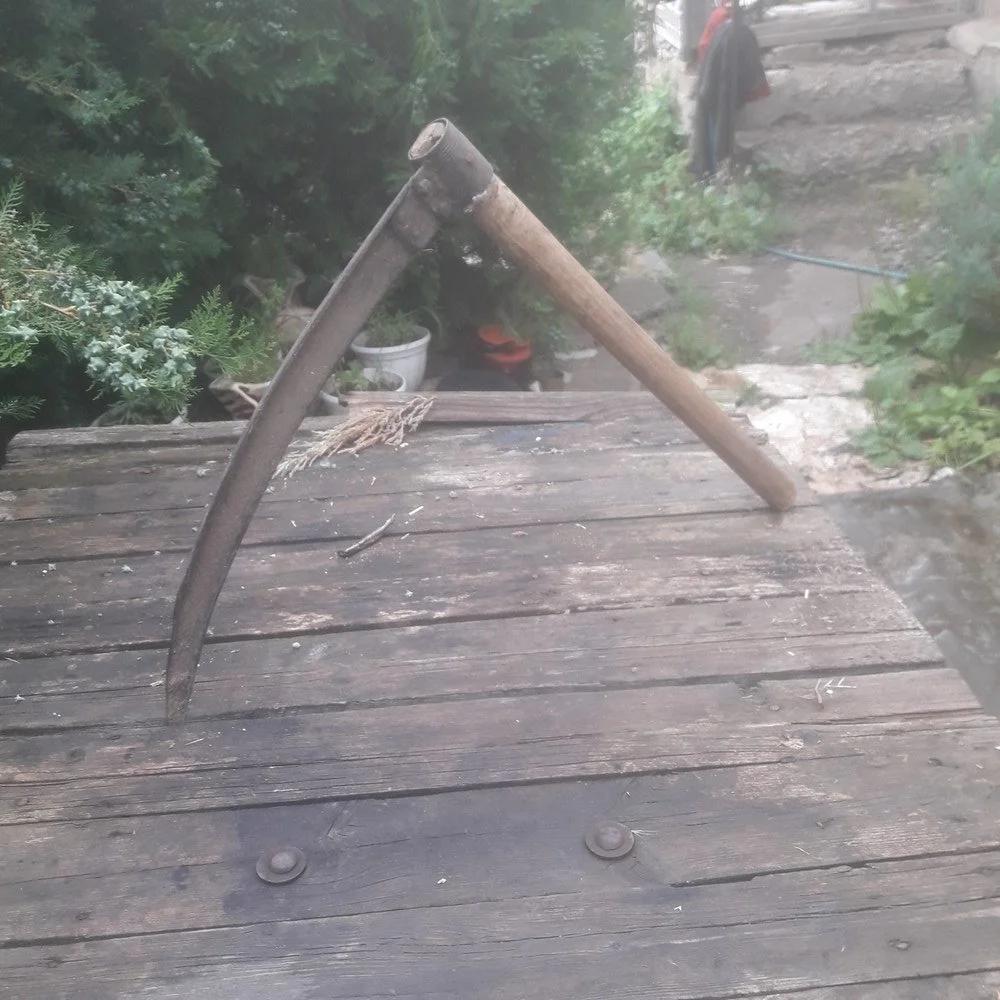
My grandfather's old scythe. This scythe was made in the U.S.S.R. 45 years ago. Soviet people didn't have lawn mowers. Small lawns were mowed with small scythes. To use one, a person had to squat. Larger scythes were used to mow large fields of wild grass.
I decided to look for new sources of information. I quickly found a couple of unbanned Russian news sites. However, after a few days of use, these sites were also blocked. Apparently, the internet provider monitors user traffic and shuts down sites it deems bad. This forced me to intensify my search. I tried to find an alternative to Telegram online. Something else that would connect Ukrainians and Russians without censorship or restrictions. The results were unexpected!
I managed to find two very large adult dating sites. One of them is for the gay community and is based in the EU. It has almost 100,000 users. The site is in Russian, and most of its users are from Ukraine, Russia and other Commonwealth of Independent States countries. People from all countries can communicate freely there, which is very surprising. It's not just that Ukraine and Russia are at war with each other. It's also that homosexuality is officially frowned upon in both countries. The site survives despite this.
The second website is dedicated to BDSM and is based in Russia. It has about 300,000 registered users. The site is also in Russian. Ukrainians and Russians communicate freely there. BDSM is very popular in both countries. There are numerous themed clubs and hotels dedicated to this topic. The war did not affect this industry. Unlike many closed factories and plants, these establishments remain open and advertise on the website.
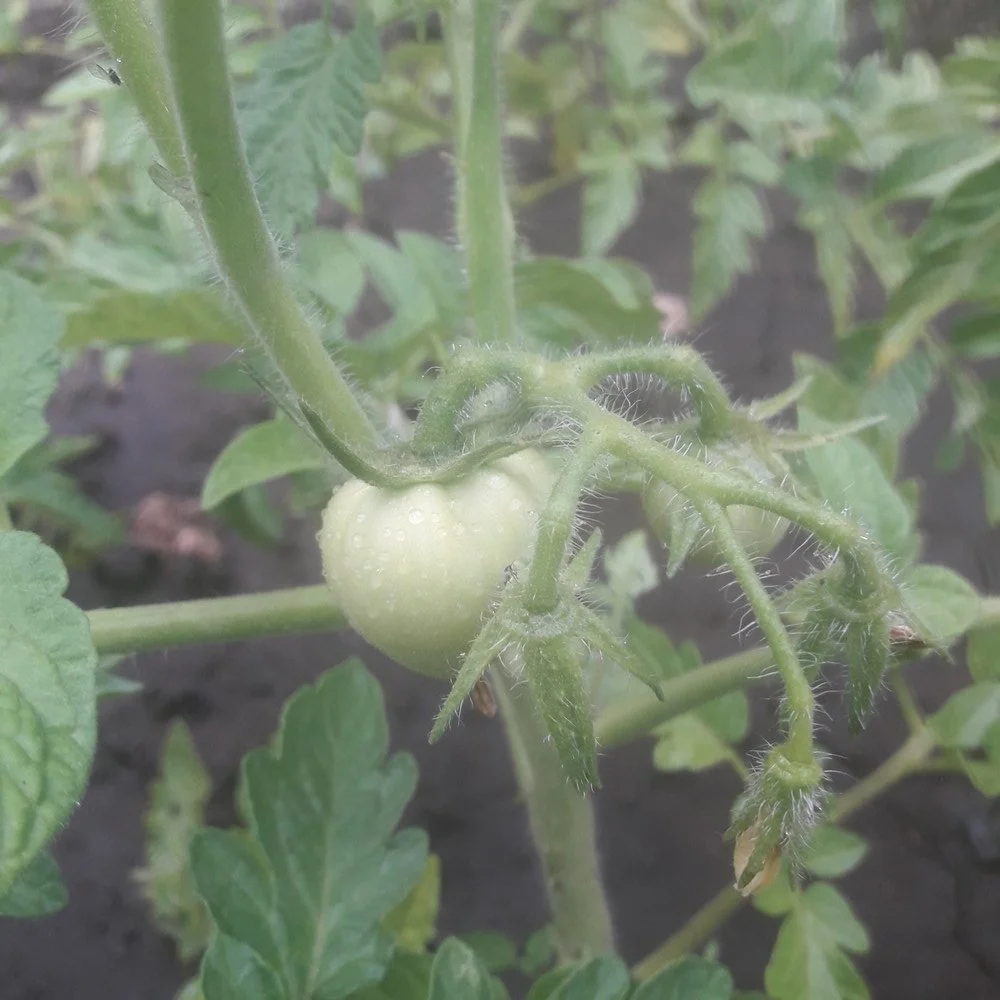
Our tomato patch. Some tomato plants have blossomed. The first tomatoes will ripen in a couple of weeks. The tomato harvest in our region lasts from late July to early October.
After studying the sites, I discovered their basic features are free. Registration is all that's required. This is quite rare. Almost all English-language dating sites are paid. And if these sites are free, they have no audience. Despite this, there are almost no foreigners on these Russian-language sites. These portals have been operating for more than 15 years and are not banned by governments. People can communicate on any topic, but they are not allowed to send links to other sites. On both sites, users communicate in Ukrainian and Russian.
There's a popular saying in our area: "War is war, but lunch is on schedule." In this case: "War is war, but sex is on schedule." Incredibly, adult entertainment turned out to be stronger than war. This amused me. I even felt proud that sites in the CIS are larger and free, unlike foreign sites. Of course, these dating sites aren't like social networks. There's no information about the war there. But this information is easily found by chatting with people registered on the site and living in the region I'm interested in. I did just that.
It turned out that users of these adult sites are willing to discuss war and life. Soon, I learned more than Telegram users know. I managed to find out rental prices, public transportation conditions, how many shelling incidents there have been, how active recruiting centers are and so on. Having achieved the desired result, I conducted additional research. It turned out there are about a dozen more sites for adult dating where residents of Ukraine and Russia can communicate freely. Incredible. The situation in this area of communication differs from that of social media and the mass media. Sex and thrill-seeking are no longer a concern of the war.
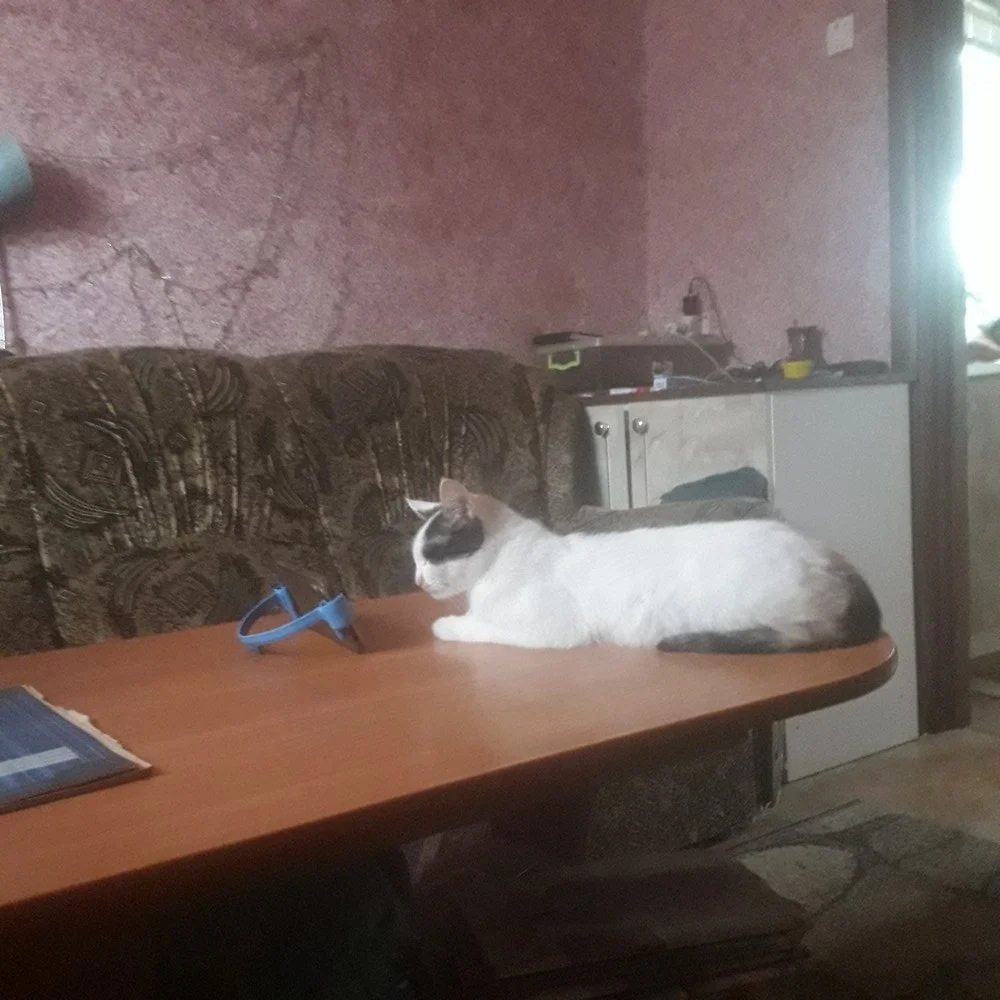
A cat named Chipizdron watches videos on a tablet. Every morning, this cat will wake us at 5:30 AM.
I was very surprised and pondered for a long time why these sites weren't banned by the governments of Ukraine and Russia. Of course, such sites are businesses, and some of their features require a fee. But that's not as much money as oil or gas, which are subject to sanctions. Therefore, money can't be the reason for the sites not being banned.
I think these sites operate because the human spirit - in this case, a basic instinct - is stronger than the false hatred generated by politicians for the sake of war. Politicians, military personnel and civil society activists likely use these sites themselves. Therefore, the portals are untouchable. Despite everything, people separate themselves from the war. And there are hundreds of thousands of such people. This interested me.
I made several provocative statements on these websites. I met a Russian and introduced myself as Ukrainian. I asked him if he'd like to come to Ukraine to meet someone. He said he'd go, but the war was getting in the way. Then I met a Ukrainian and introduced myself as Russian. I asked if he'd like to meet. He said it was impossible because of the war. In both cases, people said the Ukrainian-Russian border was closed and there was no transport between the countries. But in both cases, people didn't express hatred or promote war. They behaved neutrally.
The Russians destroyed the gas station closest to us. A drone attack punctured a barrel of gas for cars and then a fire broke out. Standing in our yard, we heard the hissing of gas escaping from the punctured barrel.
However, not everyone acted that way. Both websites have a lot of Israelis because they have a lot of immigrants from former Soviet republics. I asked the Israeli if he'd like to come to Ukraine to meet someone. I didn't mention a war zone, but some safe western region. The Israeli's answer shocked me.
He wrote, "The Israeli government does not recommend visiting Ukraine because it's dangerous!"
“Is it dangerous to come for a short visit? We've lived in Ukraine our whole lives and have been at war for the last 12 years,” I replied.
After that conversation, I felt like a second-class citizen. I live in a place where foreign governments advise their citizens not to travel. It's sad, but there's nothing I can do. I looked at my life through the eyes of foreigners. They didn't consider me an enemy, but they didn't want to be in my shoes. The war now seems even more unnecessary and insane.