
Written and photographed by Chloee Blair
THE TEAM
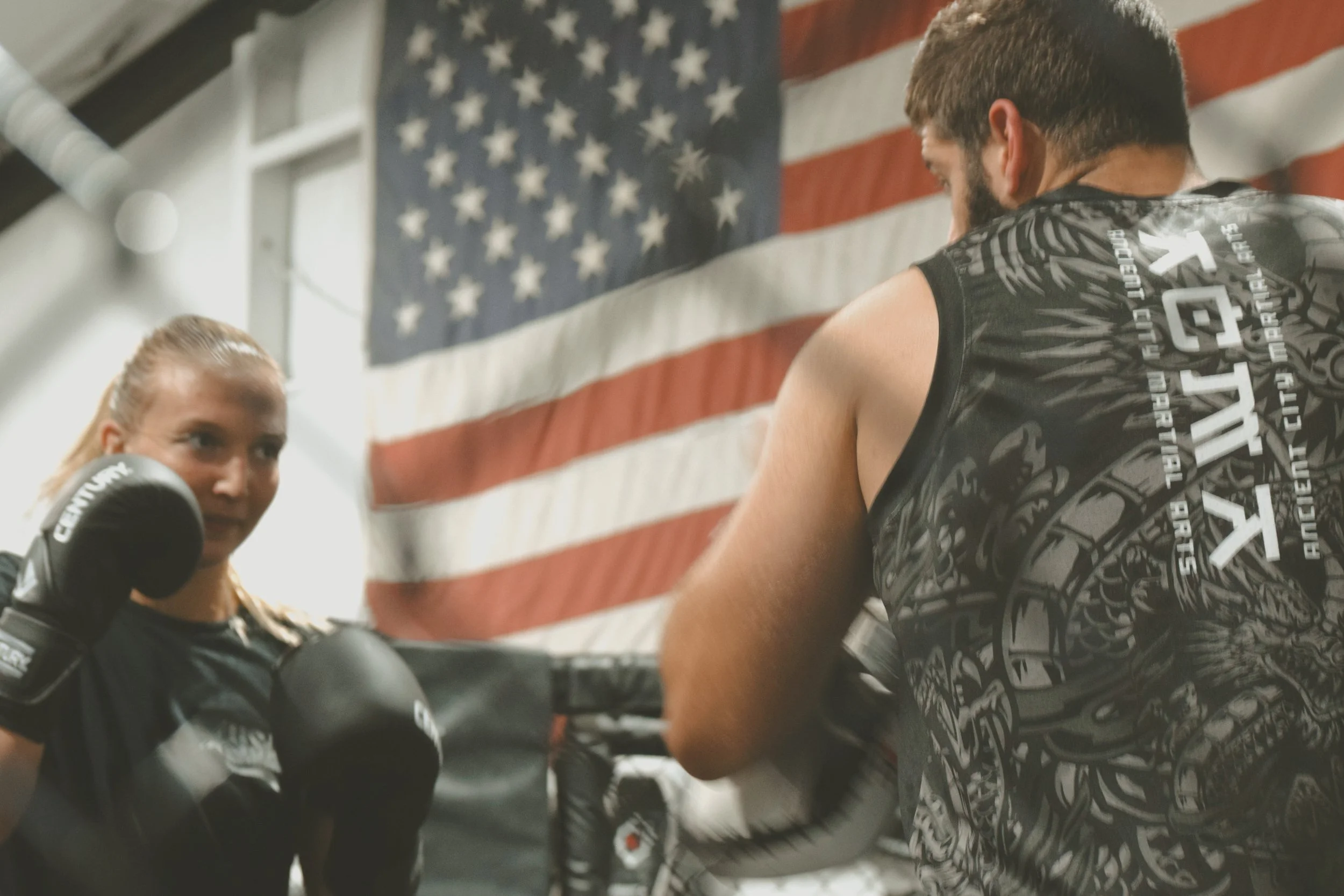
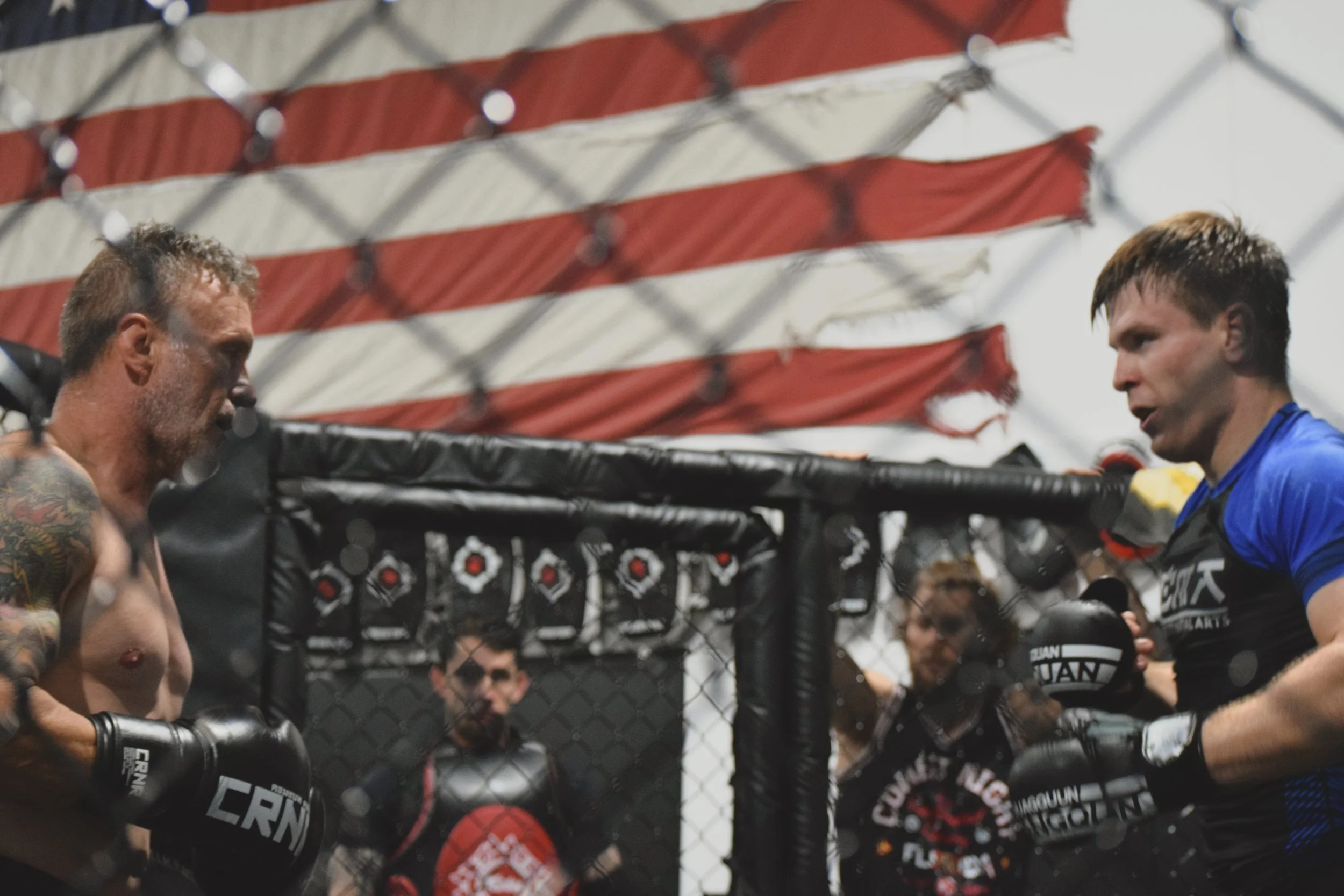
With more than six young fighters on its roster and a fight card that continues to skyrocket, Ancient City Martial Arts is quickly becoming a heavy hitter in the world of amateur fighting, from MMA to Muay Thai to kickboxing.
Chris Puttick, head MMA coach, says last year they had their first victory in two years - followed by seven wins in a row.
“We changed our mindset - we’re not fighting to get points anymore. We’re fighting to knock out our opponent. We’re not leaving it in the judges’ hands anymore,” Puttick says. “If you want to win the fight, make it definitive. That’s how we train now. Since we changed that mindset, we’ve been winning.”
ACMA owner and “team patriarch” Mike Plott leaves the hands-on, day-to-day fighter training to Puttick, Dylan Wright for strength and conditioning, jiu jitsu blackbelt and soon-to-go pro Stu Maddox and Austin Ravan, who assists Puttick and specializes in striking.
Currently, the school has six young fighters and several more on the roster to debut this year.
“We have guys in here that, if they put their minds to it, they could absolutely make it to the [Ultimate Fighting Championship] within five years,” Puttick says.
Puttick had his last fight in 2019 following a serious eye injury, which worsened when he continued to train while healing.
“It really added up in terms of scar tissue. It would wipe off from punches and then I’d go partially blind for three or four days. I couldn’t open my eyes,” he says. “So, you know, you ask yourself - okay, how do I keep being involved in this thing that I love? I’m gonna take the young kids to the top.”
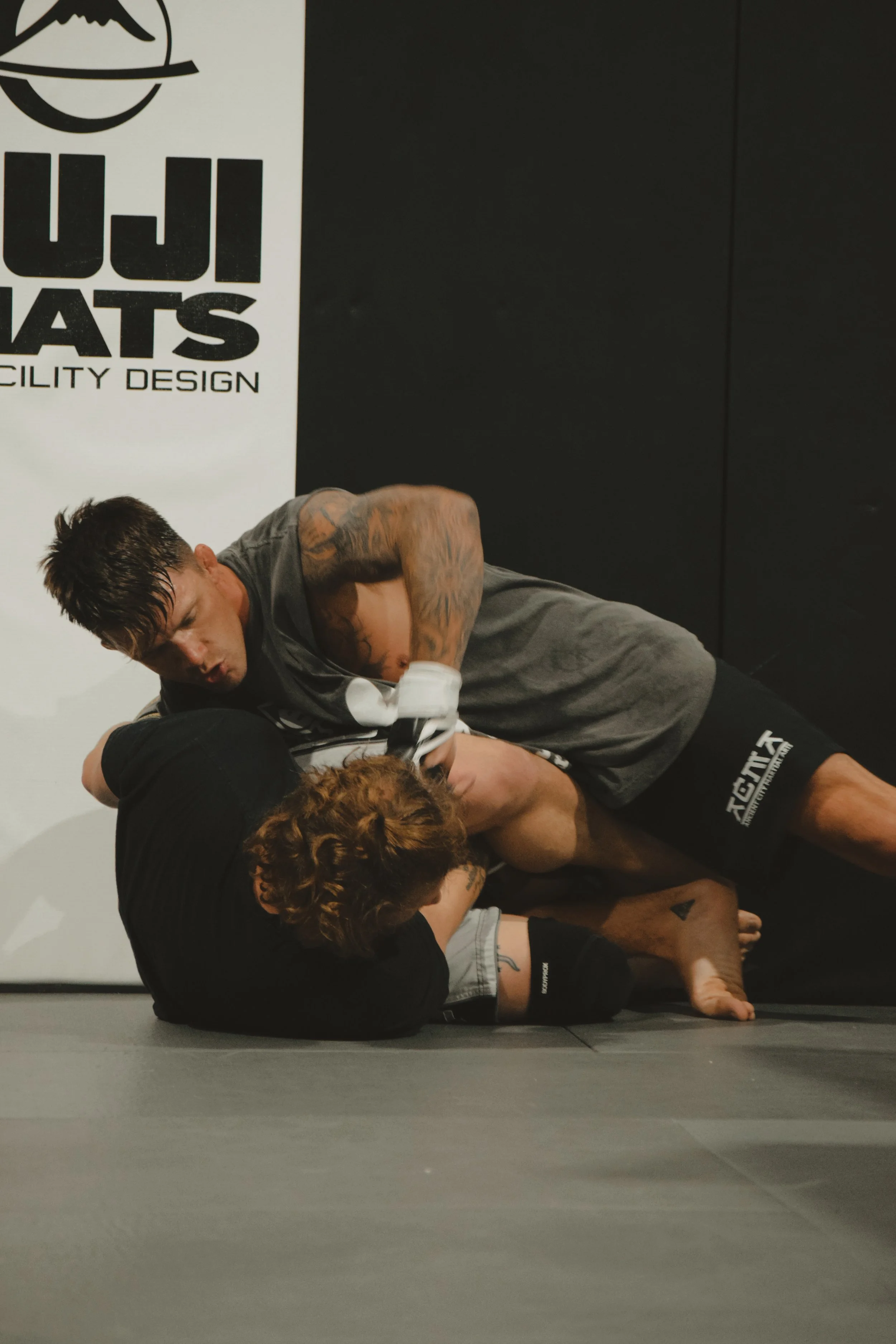
Since then he and his team, led by Plott, have developed a hardcore MMA program, and created an intense fight camp and nutritional program, all of which has led to “dominant performances” at Combat Night, the leading sanctioned event-holder in the region.
“We’re creating a platform for young fighters so they go as far as they want. And, you know, it’s really nothing special that we’re doing here. It’s just consistent hard work and building confidence,” Puttick says. “What we're gonna do is get efficient at the basics and be able to fire those a million miles an hour. And our biggest goal - we do not get tired. That's why our conditioning program is what it is.”
Chris says they train fighters to not hyper-focus on what an opponent’s strategy may be.
“You think they're gonna shoot for your legs, they level change, and then an overhand right catches you when your hands come down, and now you're on your ass,” he says. “You can't lose a football game in 10 seconds. You can lose a fight in 10 seconds because you thought what was gonna happen didn't happen.”
“The basics are what's gonna work. The flashy stuff, that comes from the guys who have practiced for years and years and years. It's muscle memory,” Chris says. “Your jab-cross-hook and your rear kick can win you a fight.”
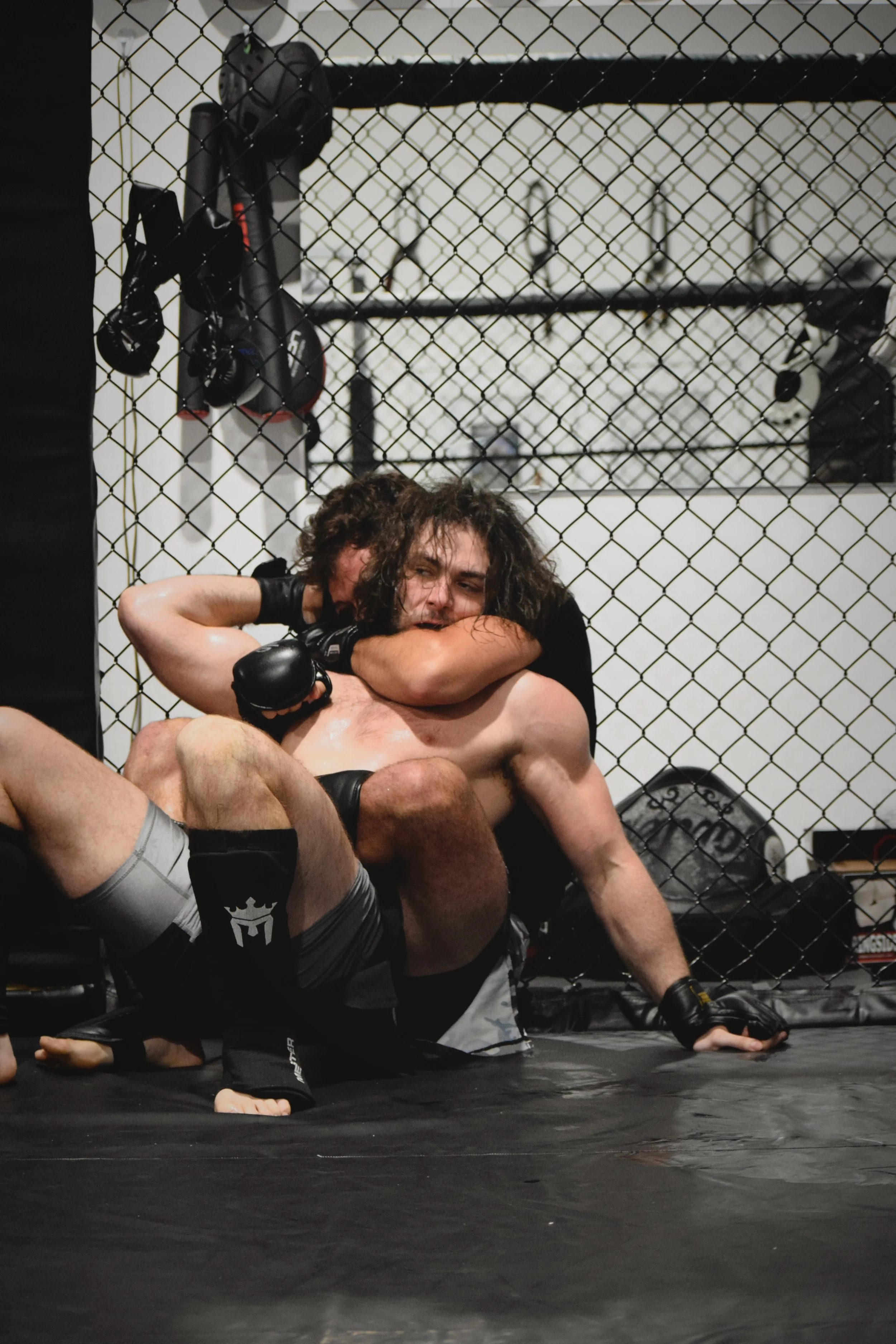
Although almost all of the fighters already attend a mix of Muay Thai, MMA and jiu jitsu classes most days every week throughout the year, they’re run through an intensive fight camp weeks before a scheduled fight to fully prepare.
“Camp shape is different,” Maddox says.
FIGHT CAMP
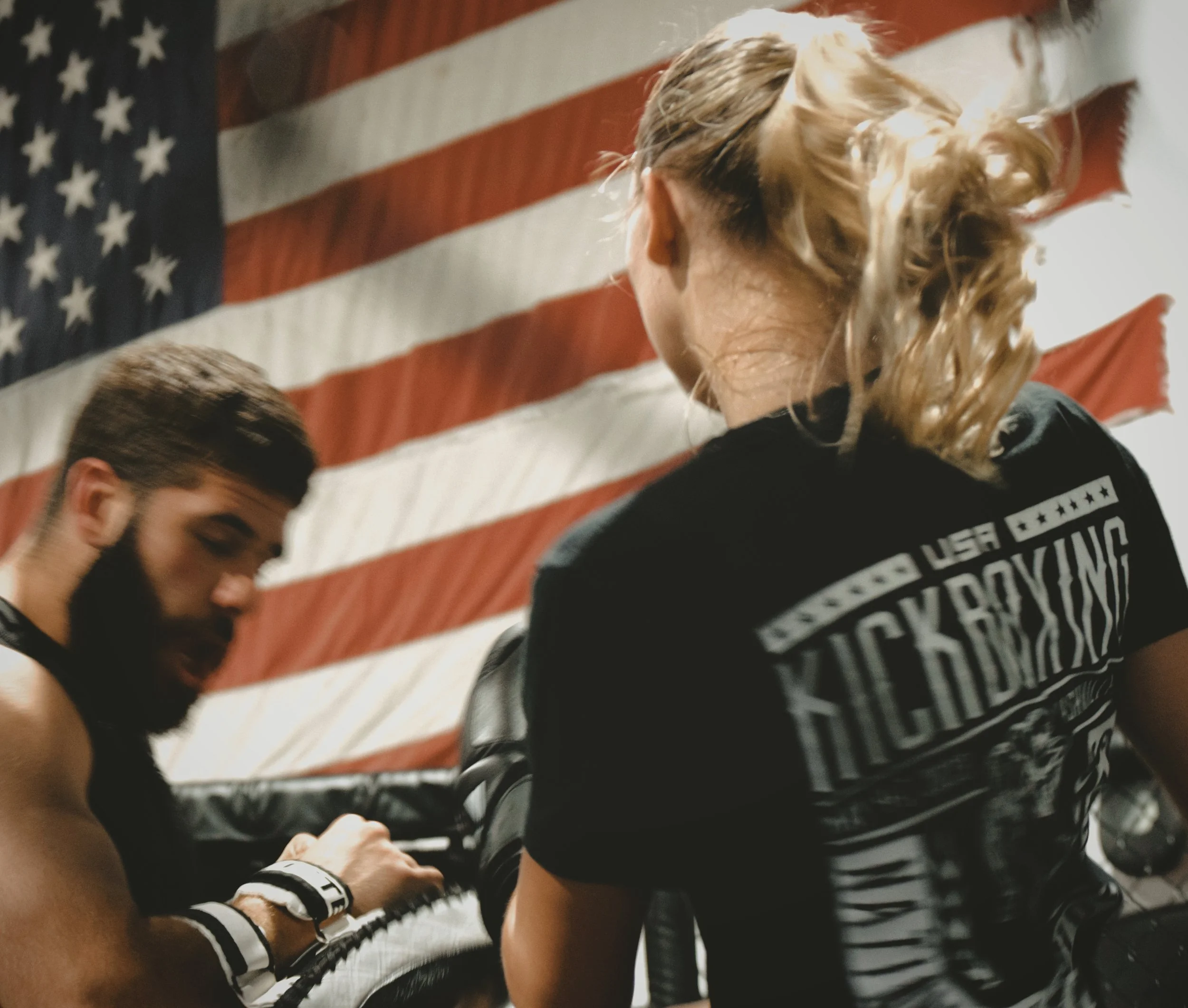
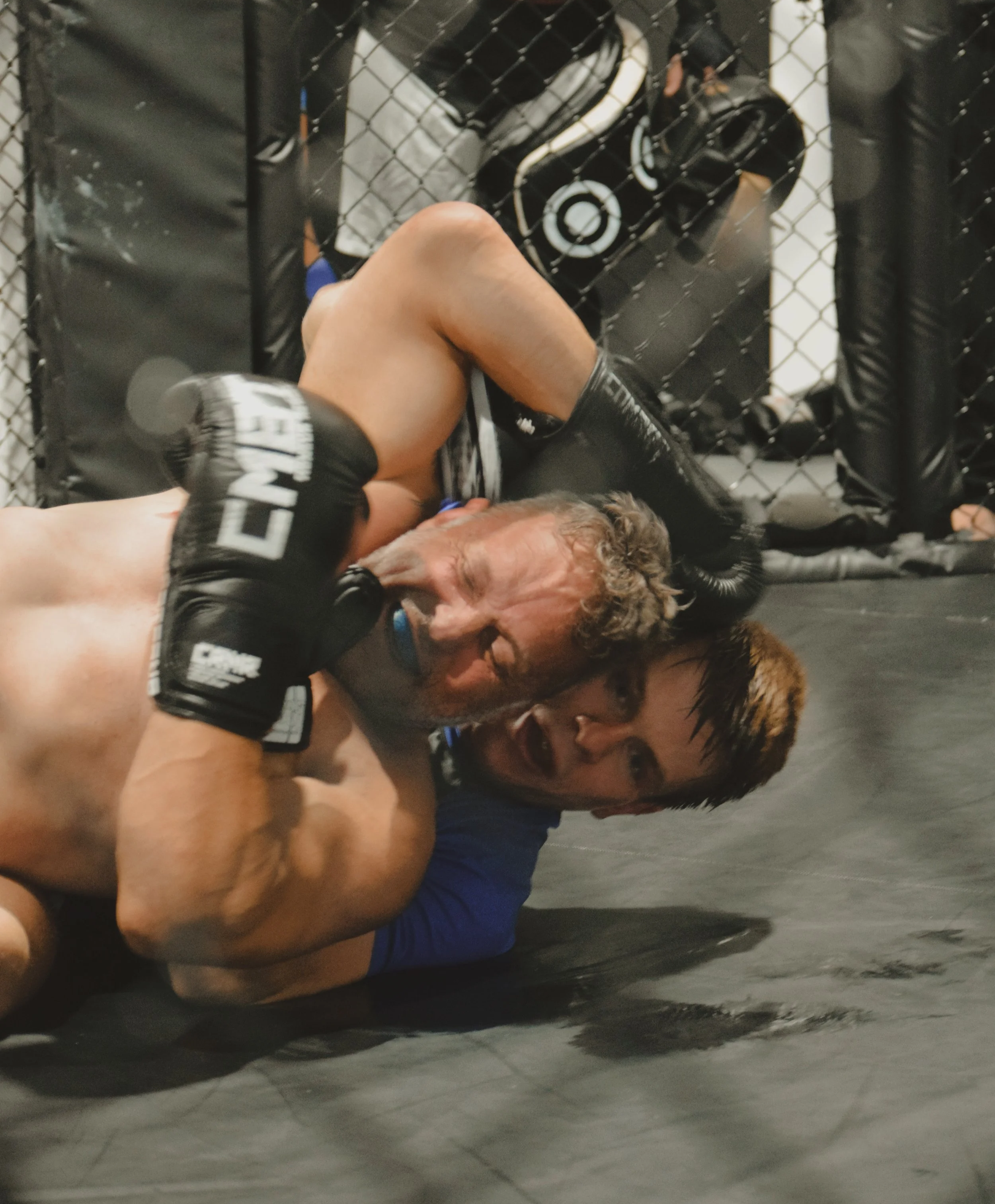
Prepping the fighters for a match involves an intensive 6- to 8-week fight camp with strict 6-day-a-week sessions and a dietary plan to keep fighters on track for the weigh-in.
That’s where Wright, the strength training coach with a masters in kinesiology, steps in.
“I kind of think of myself as grease. I try to keep everything moving smooth. I'm communicating between coaches and making sure that we're all on the same page,” he says.
“I’m not a fight coach. I don’t tell them to throw a certain combo. I tell them - you need to bring your right hip through on your cross because that delivers more power. Keep your shoulders over your hips when you move so you have a base,” Wright says. “Stuff that pertains to how the body’s moving, how to generate more power and how to protect yourself better.”
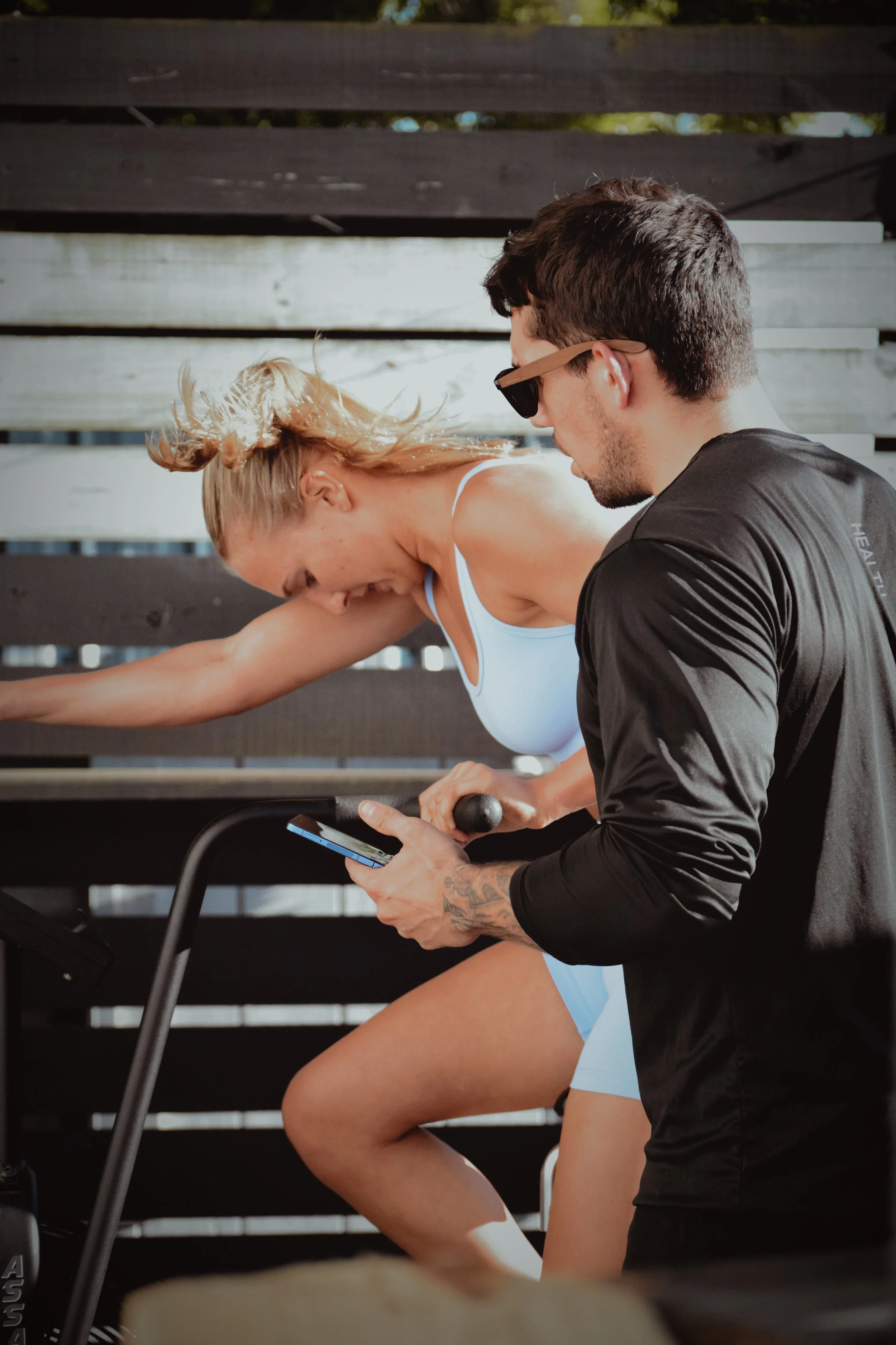
Wright uses the assault bike - hated by everyone at the gym but top-tier for turning fighters into cardio machines - for VO2 training, “working on max capacity” during the first half of the fight camp to “increase power output [and] learning how to push our body.”
“I take a bigger role in terms of being their sparring partner because I step in there knowing I’m going to get hit hard without feeling the need to hit hard back,” Wright explains. “With some fighters, it can be really difficult to remind them that - hey, it’s not about you right now. So even though you’re getting hit hard, you’re not going to escalate to how hard they’re hitting you. I don’t have a problem doing that because I’ve been doing that with [Puttick] for years now.”
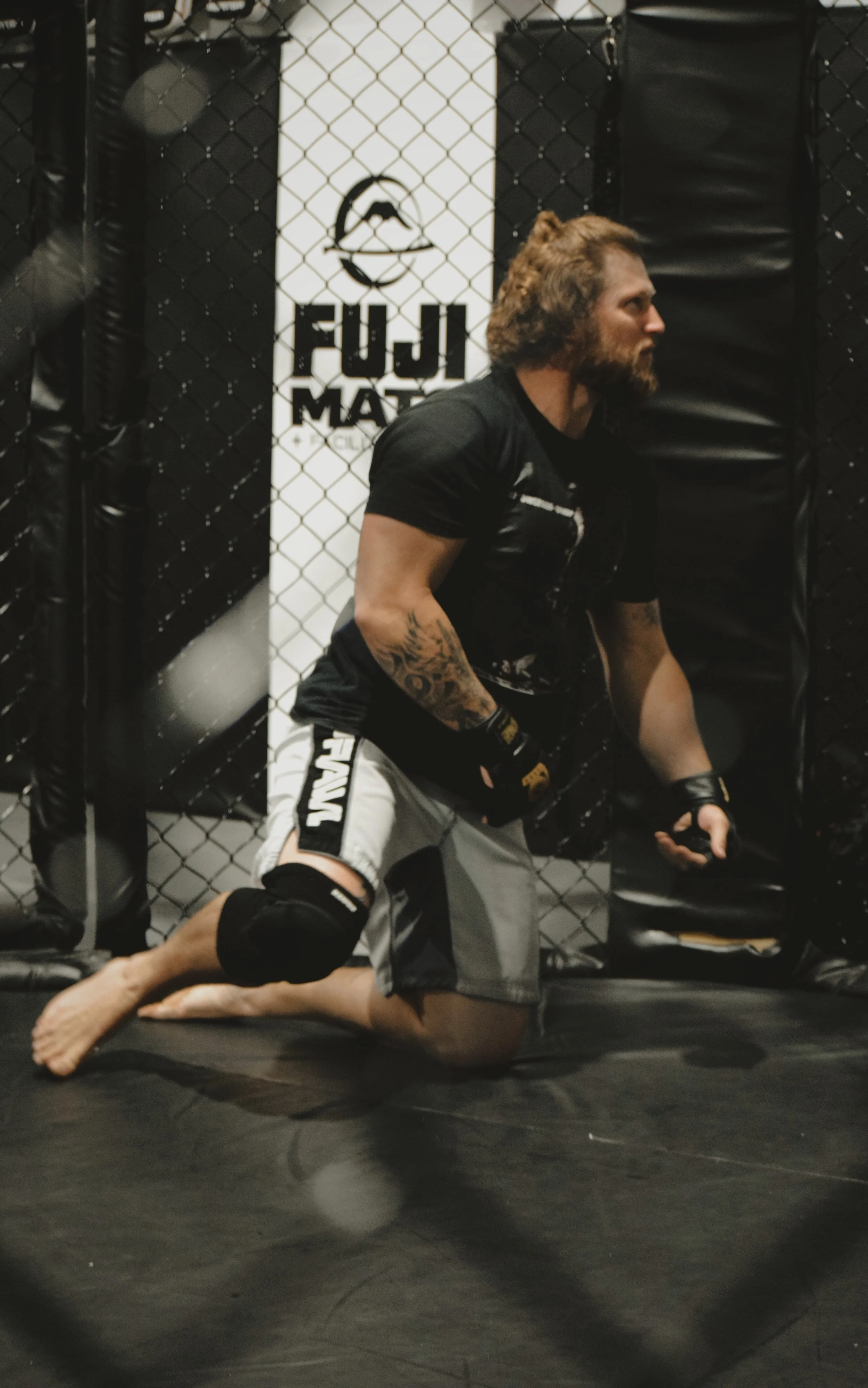
Wright, a Washington State native, says Puttick - whom he met while they both were serving in the Marine Corps in North Carolina - is the reason he discovered St. Augustine.
“I came down here, visited his family, spent like a 3-day weekend. Absolutely gorgeous, loved it,” he recalls. “I’ll never live anywhere else. I’m a Florida boy now.”
Eventually, Puttick asked Wright to train him to fight competitively. At that point, Wright says they divided their time between their marine construction work and training. “We would wake up early, come here and train a few days a week, be at work by 8, work ‘til 5 and then come here.”
Wright also lays out the fighters’ nutritional plans.
“Every fighter has a different level of knowledge when it comes to nutrition. For somebody like [Brent Vona], who has a background in bodybuilding, he's really sharp about tracking his macros. Brent and I just talk strict numbers. I give him what I want for grams of each of the macros and total calorie count, and he does it. Other fighters that aren't necessarily on top of their nutrition, we talk in more general terms. So - hey, strict eating. No soda, no candy, no desserts. Good carbohydrates - potatoes, rice, no noodles. Sourdough, if you're gonna eat bread. Good proteins,” Dylan explains. "I monitor weights. I start weighing fighters in halfway through their camp, so we can take a look at where they're at, compared to where they need to be.”
And the weigh-ins are strict - fighters are only allowed a 2-pound variance on the day before their fight at Combat Night.
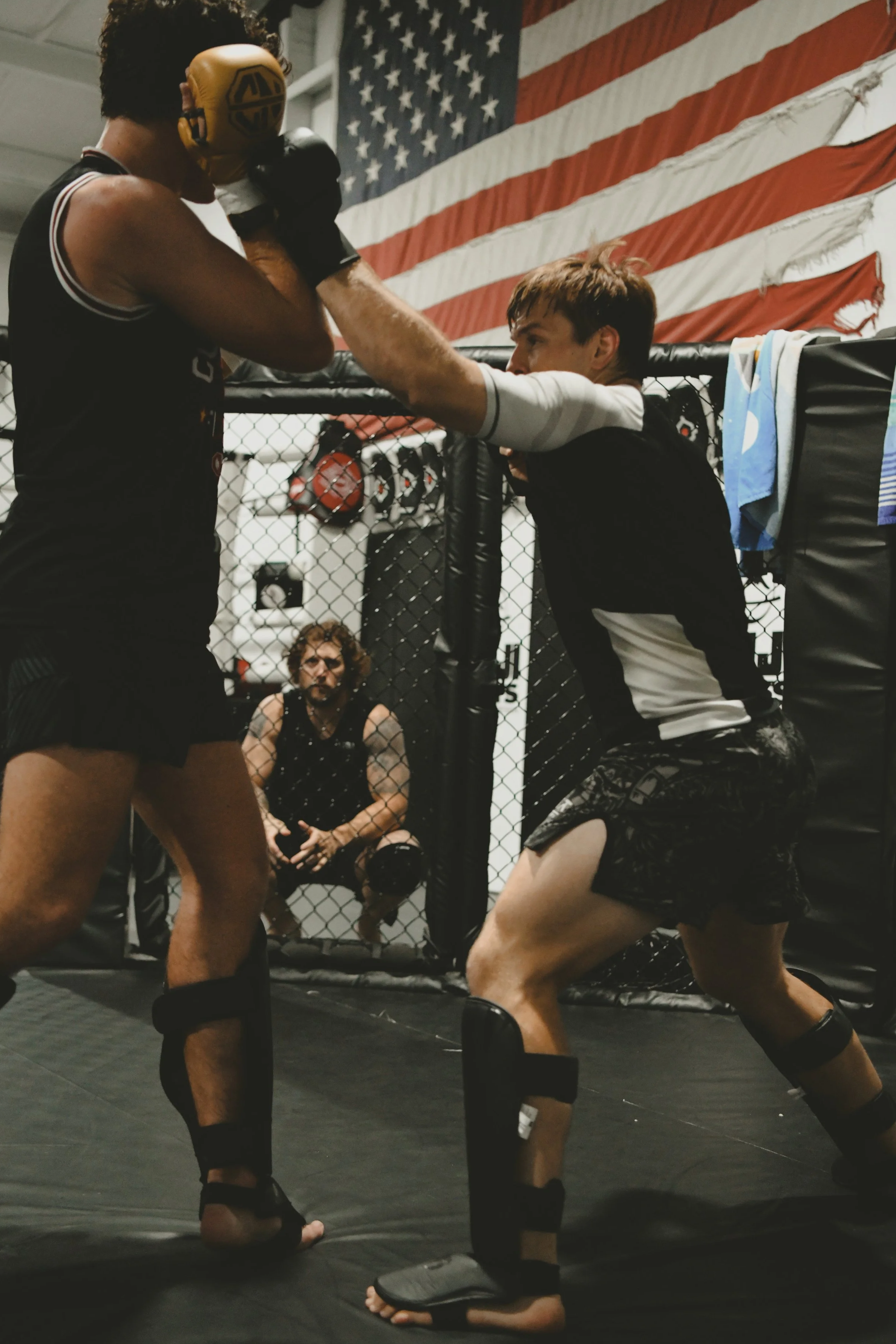
CUTTING WEIGHT
“I think my biggest cut was 204 to 170,” Puttick says. “I did that within about a month, and within the last hour, went from about 180 to 170. It puts a lot on the body for sure. But I was back at 185 the next day in the cage.”
He explains they have implemented a calculated rehydration protocol that starts the moment the fighter steps off the scale.
“If you're dehydrated, that's why you see a lot of guys go in there and they get touched with shots that seemingly just barely touch their chin, and they go out, 'cause they cut so much weight, they're weak,” Puttick says.
Maddox, a 6’3” dude, says he made the mistake of fighting outside his weight class.
“[The opponent] dwarfed me at 6’5. My head was the size of his shoulder. I weighed 205 on fight day, but he weighed 225 and felt every bit of it. I’ve never been overpowered like that before,” Stu recalls. "That was our wake up call - you fight in your weight class.”
Maddox, who will be the team’s first member to go pro and plans to fight this Fall, says he should be starting fight camp around 195 and dropping to 170 for the weigh-in.
“By fight night, I will be 180 or 185. You can gain that in a day. We have a whole regimen for how we do it,” he says, explaining it starts with electrolytes, little snacks, like protein waffles and blueberries, followed by mini-meals, like chicken and rice.
“Usually, by the time UFC fighters do the ceremonial version for TV or online, that's two hours after they actually make weight,” Maddox says. “They're already doing better by then. They've already put 10 pounds back on, whether it's between water or food.”
COMBAT NIGHT
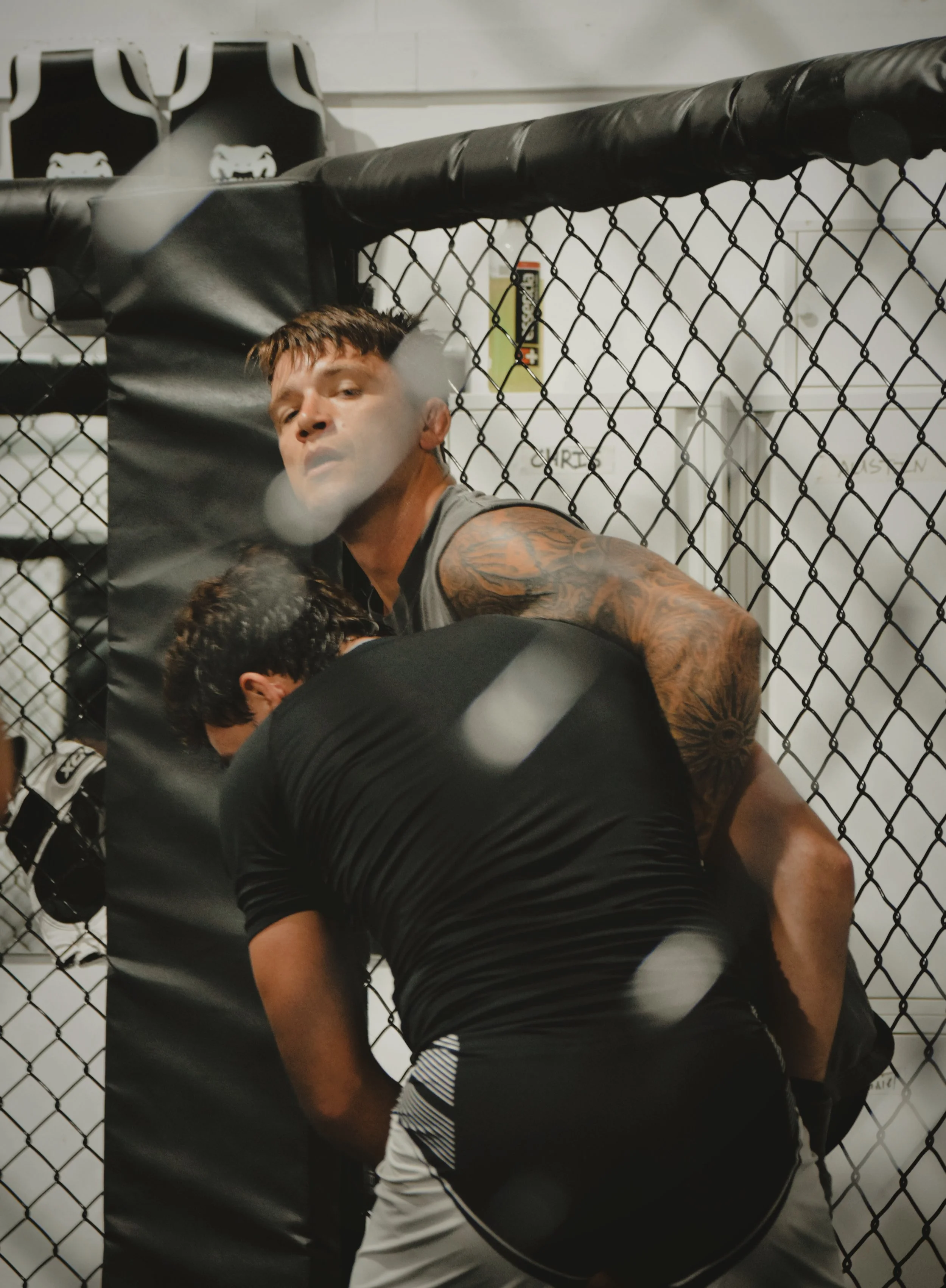
Combat Night is one of the biggest regional promotions in the country, hosting several events across Florida throughout the year. It’s also a pipeline for career-oriented fighters to go on to the next tier in fighting promotions - Legacy Fighting Alliance - and from there, the UFC, Chris explains.
“Florida is known as the Mecca for MMA in the world, so we’re really lucky to be here and have all of the resources,” Puttick says. “It makes it easy for us to find fights so we can stay active.”
“It's just, go, go, go. There may be 12, 13, 14 on that night’s amateur fight card, and then they'll have a full pro card,” Maddox says. “So they'll start the event at like 4:30 and won't finish ‘til midnight.”
Although an amateur fighter can go pro after five sanctioned fights, many serious fighters will remain at the amateur level to gain experience.
“The point of amateur is to get all your practice. If you end up losing, for whatever reason, that's your opportunity to learn. Nobody remembers your amateur record when you go pro,” Puttick says. “You want to take that opportunity to meet and face every type of fighter - the striker, the grappler, the flashy guy, the trash talker. That way, when you go pro, you're ready for anything. Once you’ve faced all kinds of variables like that, or you can't find somebody to fight you anymore at the amateur level, that's usually a sign - it’s time to move up to pros.”
Ravan, former fighter and assistant coach for the fighting team, says what they have at ACMA is like no other.
“I’ve seen other places, seen other gyms, but nothing compares to this,” Ravan says. “What [Plott] has done for the whole program - you can’t find that anywhere else.”
The fighters
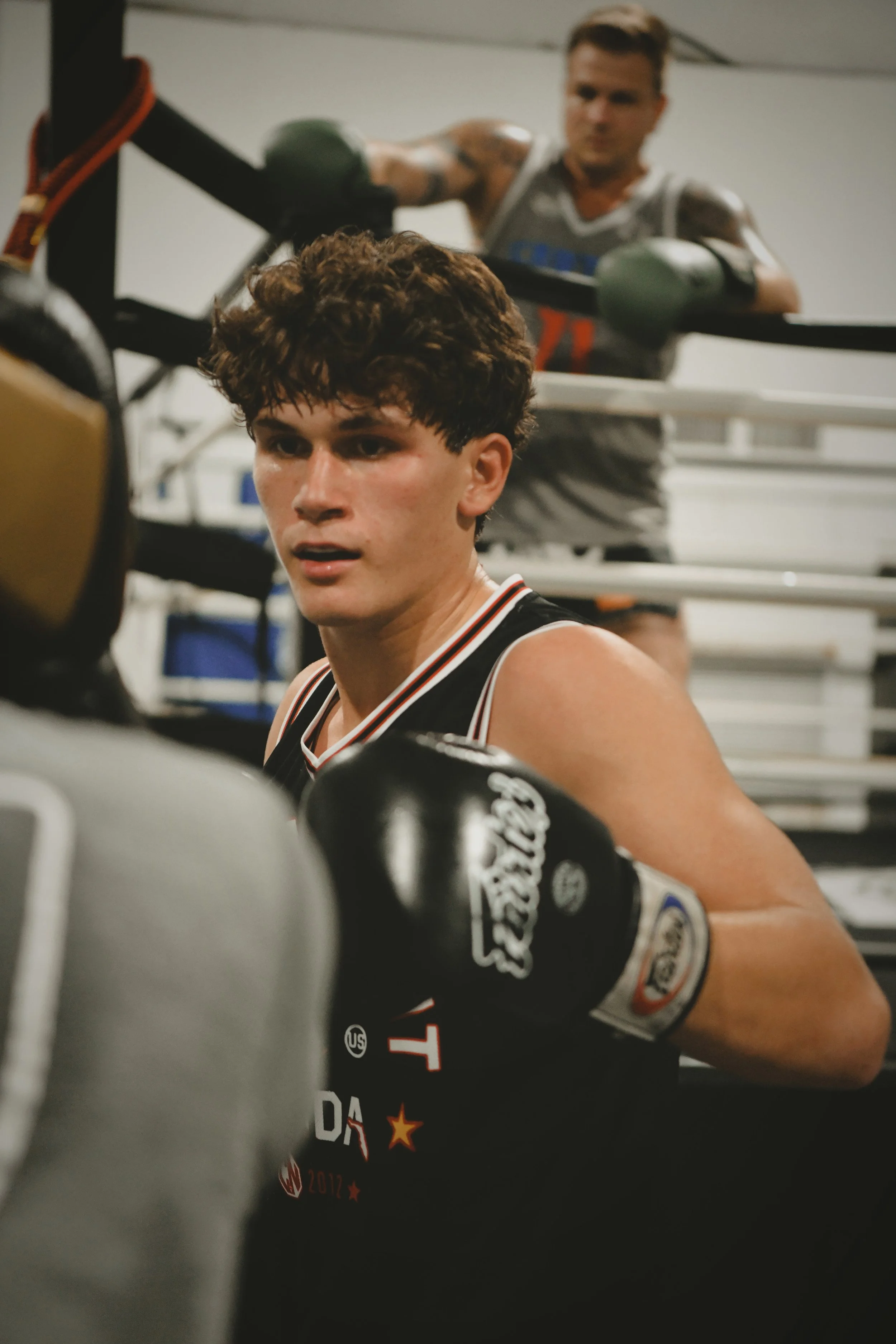
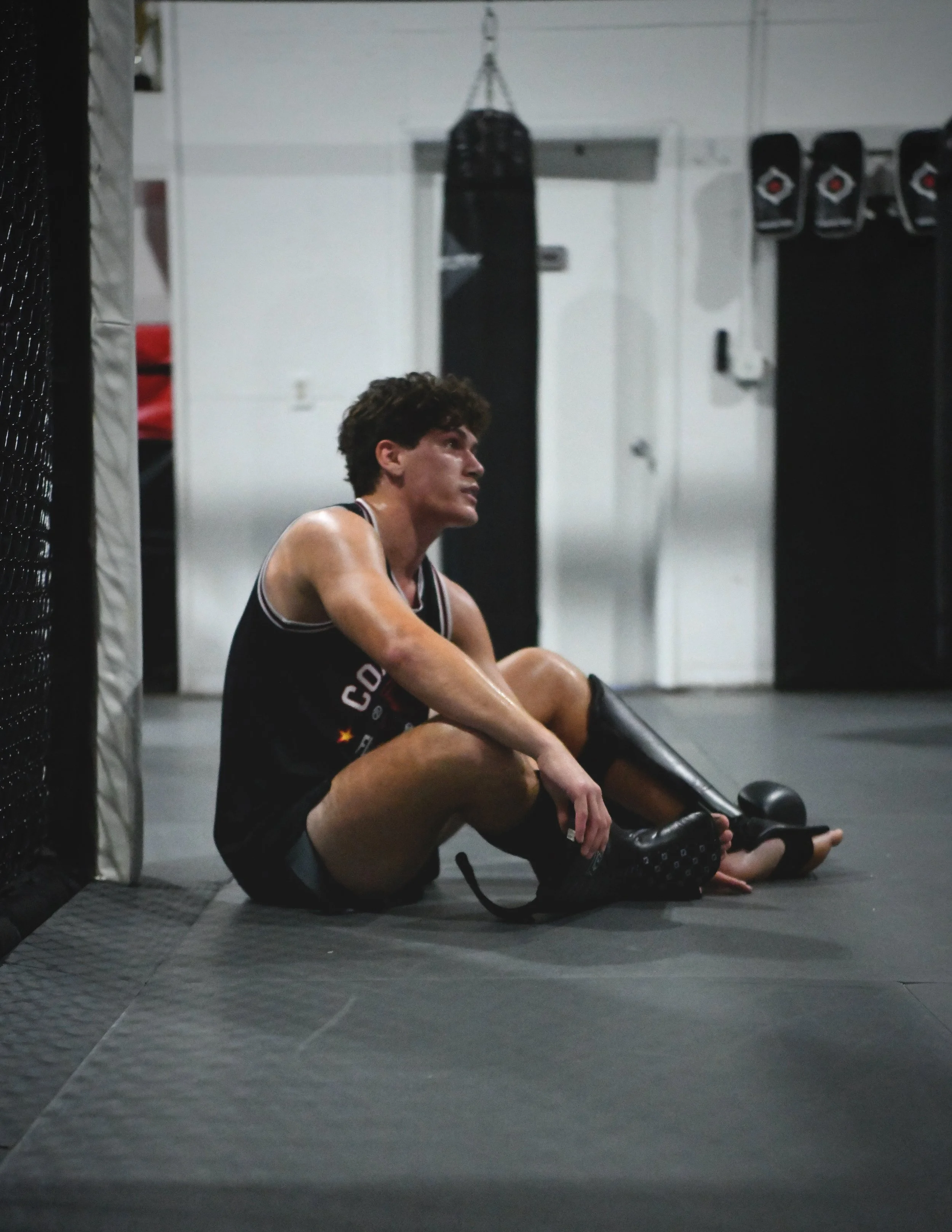
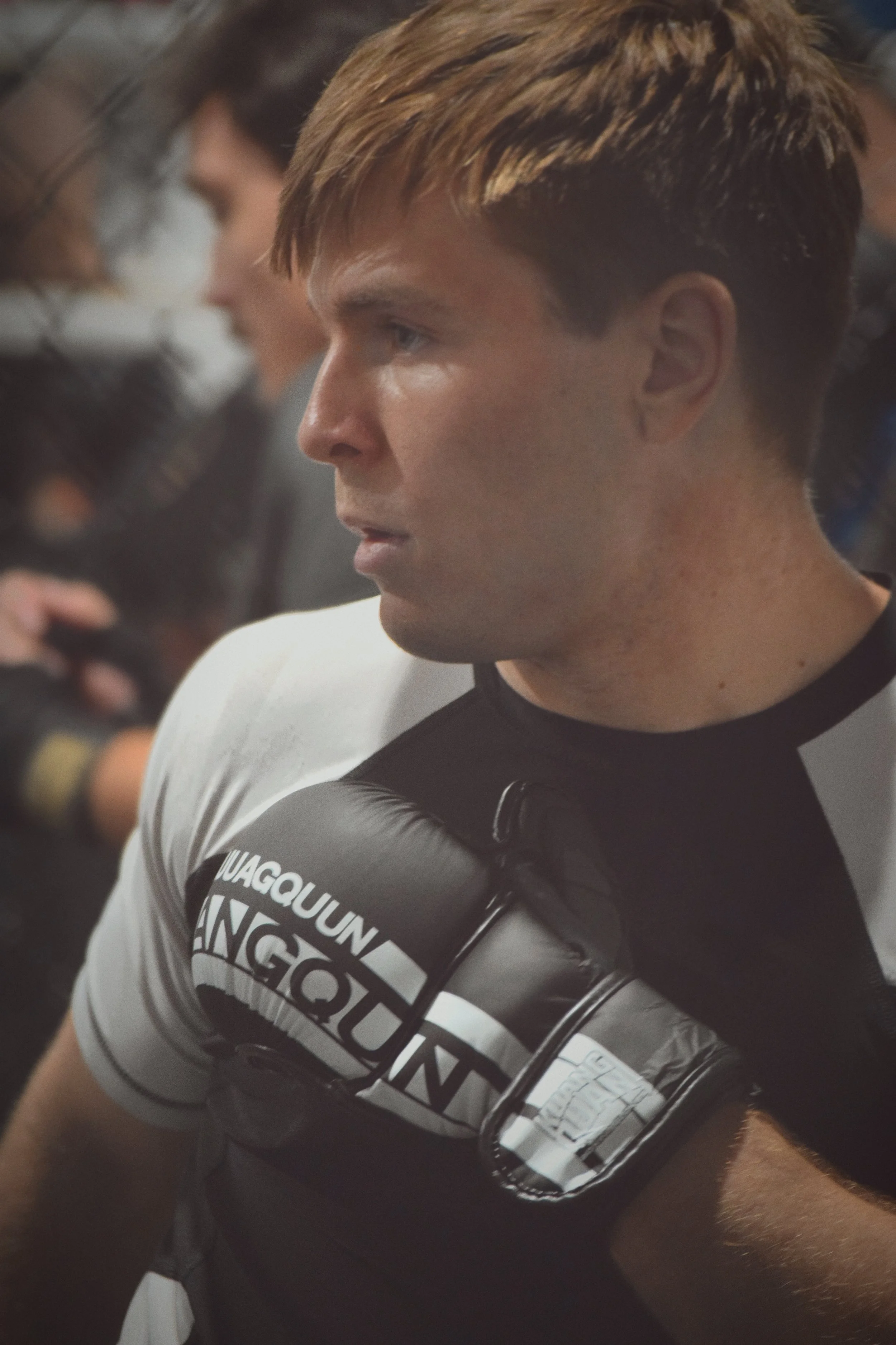
Carlo Colalillo
A business finance major and full-time contractor’s apprentice, 19-year-old Colalillo has won both of his fights with first-round TKO’s.
But he says the first fight is hazy.
“I was all excited. But when I got into the cage, it was like a blackout. I didn't really remember anything that happened until I saw the videos. But it was good. I won in about a minute,” Colalillo says.
“My second fight, it was more like, then I knew what was coming, so I was a lot more nervous beforehand. And then when I got into the cage, I was like, I was calm and I was like, this is what I'm here for. And I was just super excited to just fight. And I won that one in about a minute, too.”
Colalillo began martial arts by boxing with his buddies in their driveway.
“And then my neighbor knew one of the fighters that trains here and hooked me up with this number, and it just kind of went from there,” Colalillo says. “I met up with him, he took me to the gym, and I've been hooked since.”
Colalillo balances a full school schedule, full-time job and reffs soccer games when he can, but works MMA and jiu jitsu in at least twice a week.
“But it's a lot different when I'm in [fight] camp - then I make sure I can get here every single day.”
Colalillo is scheduled to fight on July 11th at Combat Night in Gainesville.
Julian Panek
Working two jobs, attending EMT school and looking to move to firefighting soon, 24-year-old Panek also attends ACMA five days a week.
With a background in jiu jitsu and lots of recent striking practice, he says he really enjoys MMA, and is actively looking to fight again soon.
MIKE YELICICH
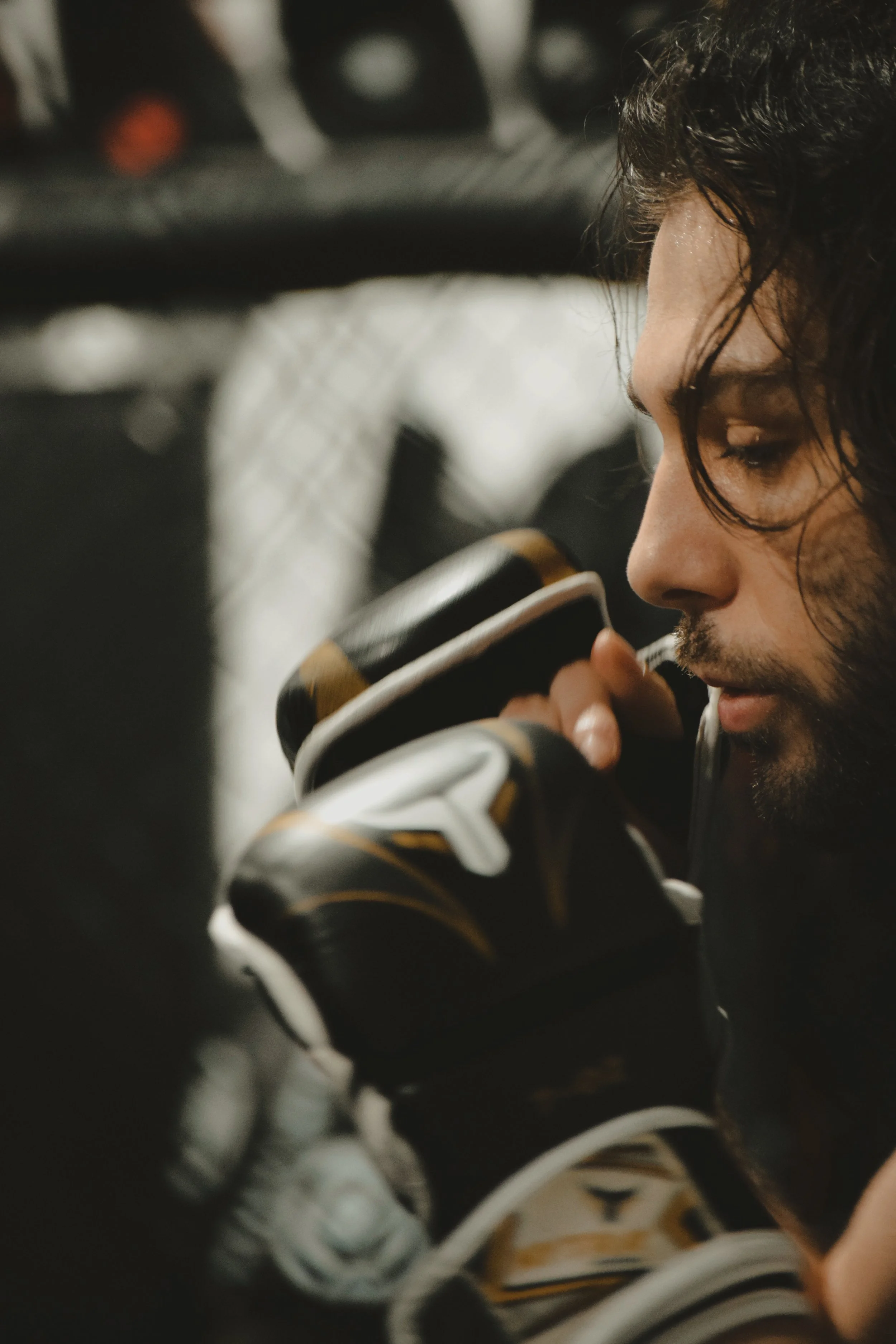
Twenty-five-year-old Yelicich attends martial arts classes five days a week while working and moving towards a masters degree.
“I wanna fight often. I want to fight a lot, and I want to do everything I can to advance my potential to fight at a high level,” Yelicich says.
He discusses what a fight night looks like, and how even placement on the fight card - when you go into the cage - can make or break a match.
“I kind of like it getting [the fight] done earlier because, during my last one, I wouldn't say I was nervous, but you get to build up a little anxiety when you're just sitting back there waiting,” he says. “You hear somebody get knocked down out there, and the whole crowd erupts. You don't want to be that guy who's just got knocked down. Your mind starts racing. But as long as you focus in and calm down, it's not too bad.”
Although he’s had three fights so far, he says he’s happy at amateur level for now to take full advantage of the experience.
“You don't want to be a pro learning on the job.”
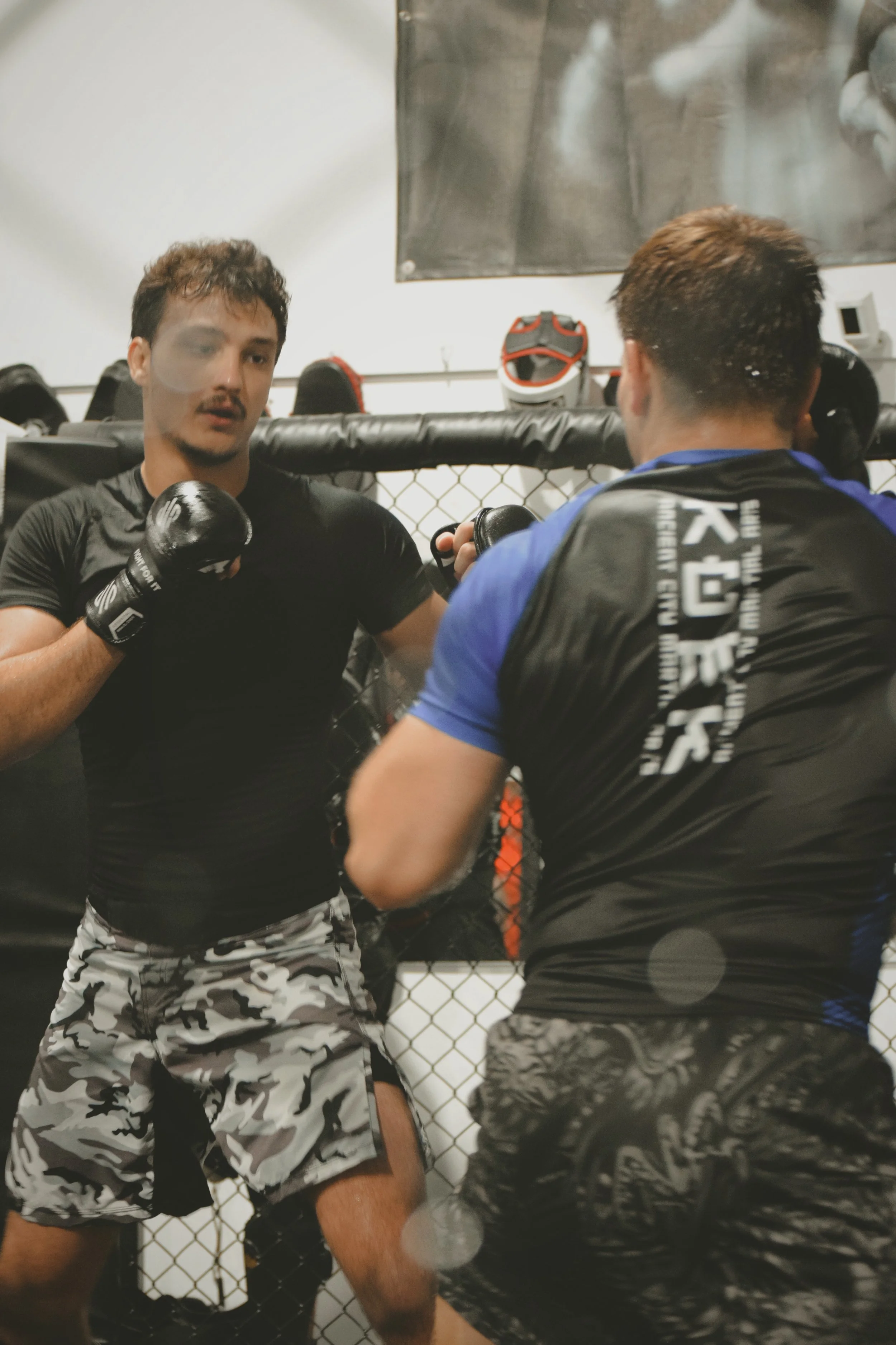
Andrew Jacobson
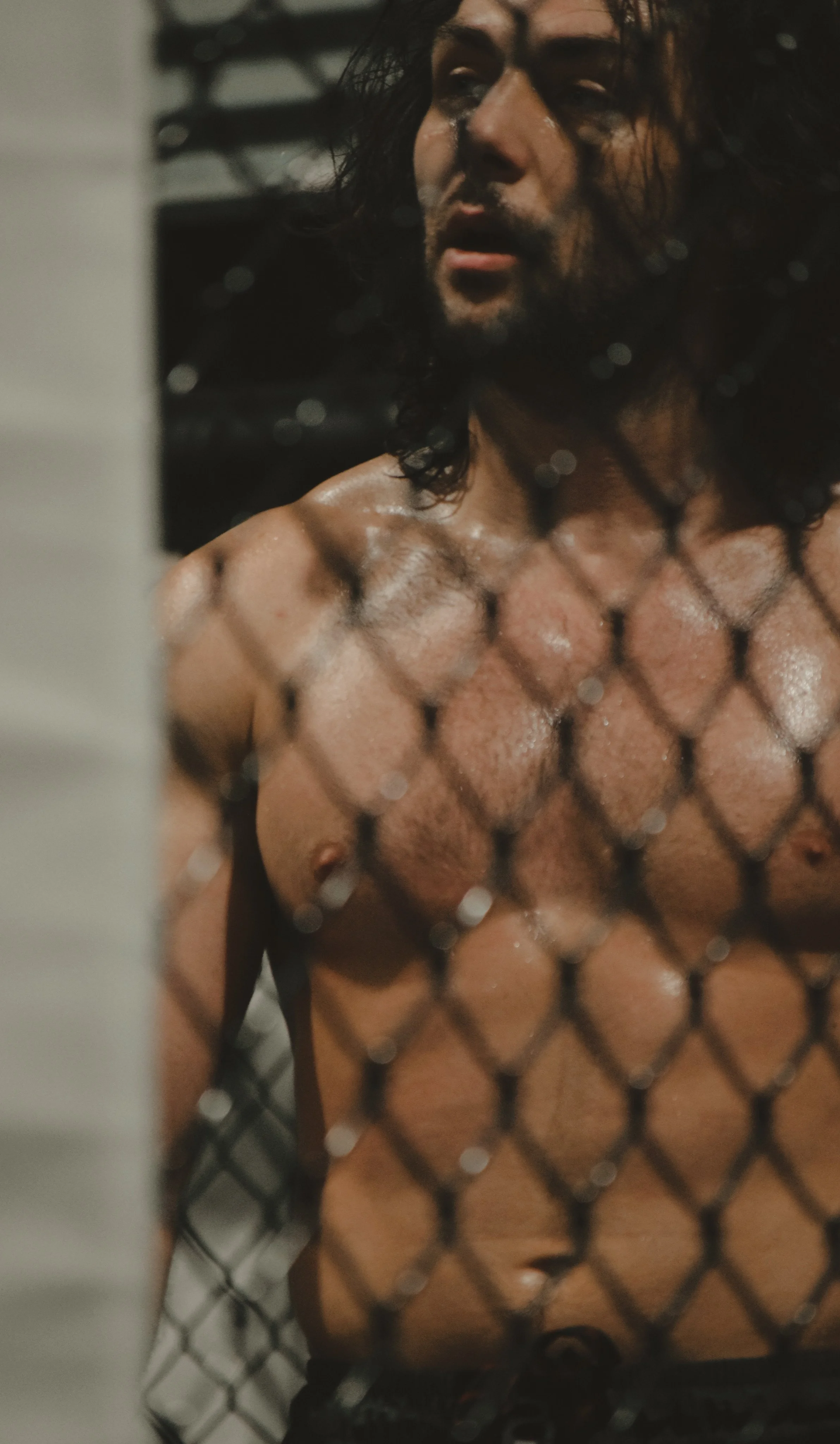
Training five days a week, 26-year-old Jacobson comes straight to ACMA after a full day of engineering work with Northrop Grumman.
Currently, he’s in fight camp, preparing for his July 11th match at Combat Night in Gainesville. He says Wright lays out a great structure to follow during camp.
“It helps knowing what you're getting into each day so you can kind of prepare your week. Like, I need to drink more water ‘cause I'm going to be doing a lot of sparring grounds today, or I need to make sure I get a good rest for my legs, 'cause I'm gonna be on the bike.”
However, he’s only looking to do about one fight a year.
“I think it's a good structure right now. It gives me time to help my teammates. Gives me a balance of being their partner, as well as focusing on myself, and it allows me to pick out the best time during the year,” Jacobson says. Recently engaged, Jacobson says that may change after wedding planning is over, saying his fiancé has been nothing but supportive.
“ I started this sport because this is the most fun thing I could do. And I couldn't ask for a better person in my corner, really,” he says. “She knows it's a lot and she's willing to help me whenever she can.”
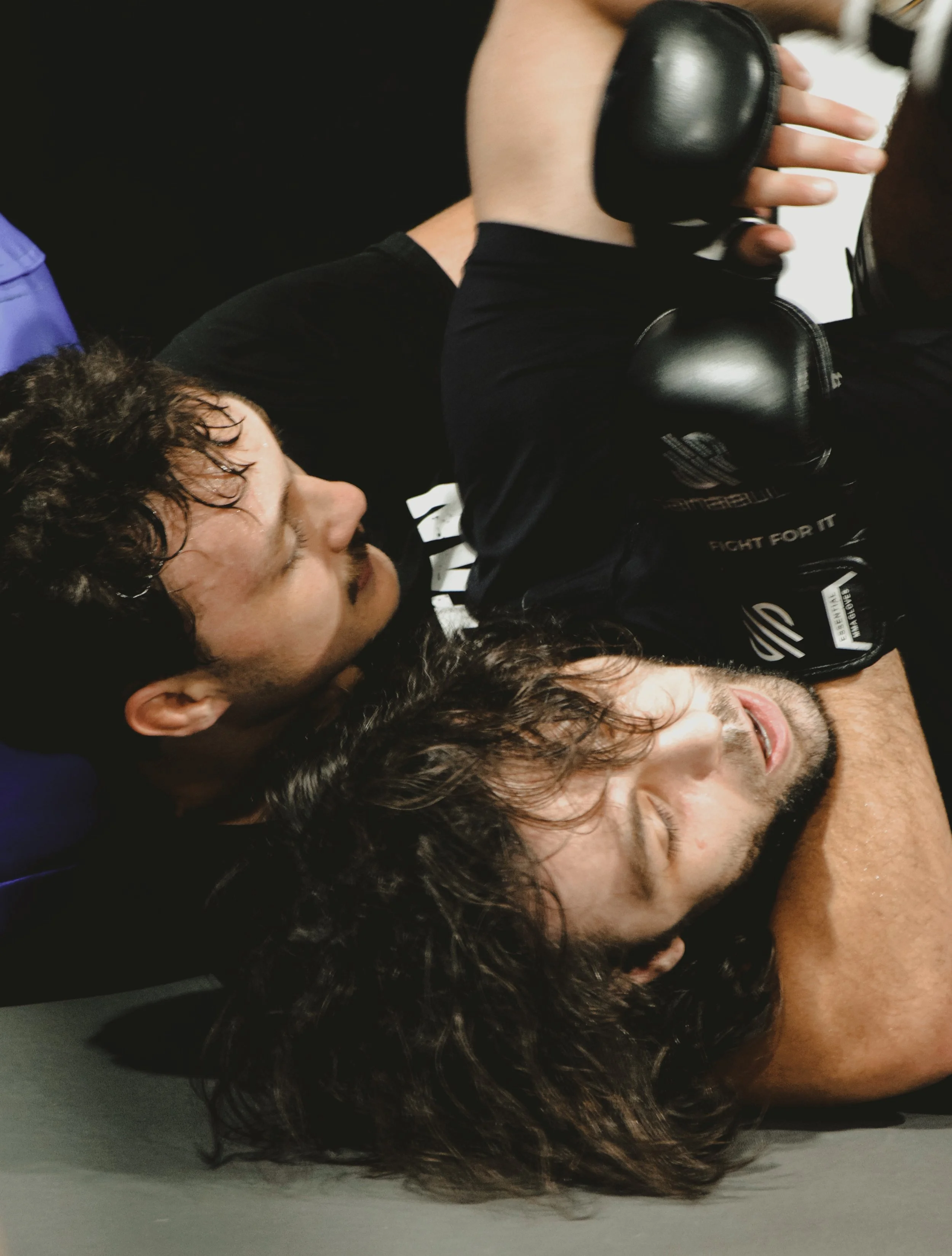
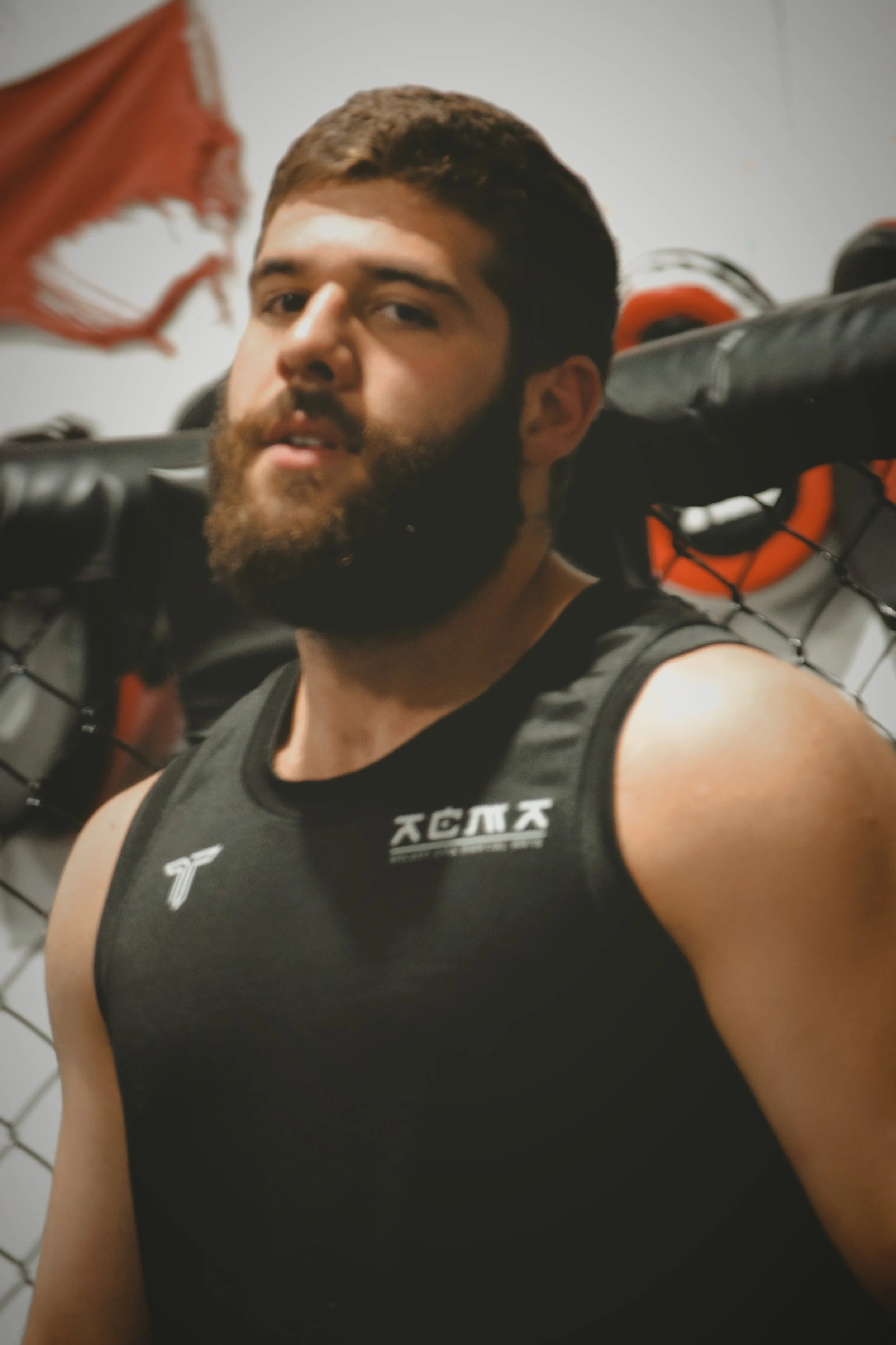
Brent Vona
Boxer, wrestler and two-time winner - Vona says he fell hard for martial arts.
“I was training for health and just the love for martial arts, and then seeing and surrounding myself with the fighters that were here just made me want to do it even more,” Vona says. “So instead of just coming here and training, which is what I fell in love with, I fell in love with the process of everything. That’s what made me want to really start chasing after that goal of getting my first fight, and then getting my second fight.”
Although he loves the idea of the UFC, he’s struck by the contrast between the art of the craft and the entertainment factor that’s required by the popular televised MMA organization.
“My coach would tell you, it's easy to make in the UFC, it's hard to stay. If you're not entertaining, they might not keep you,” he says. “ You know, it's entertainment. You gotta give the people what they want. And it sucks. It takes a lot from the love of the martial arts, like the culture and everything coming from just falling in love with martial arts. Because martial arts alone is different. It’s not about all that. It's about way more. Martial art is beautiful. It really does seem like two different worlds.”
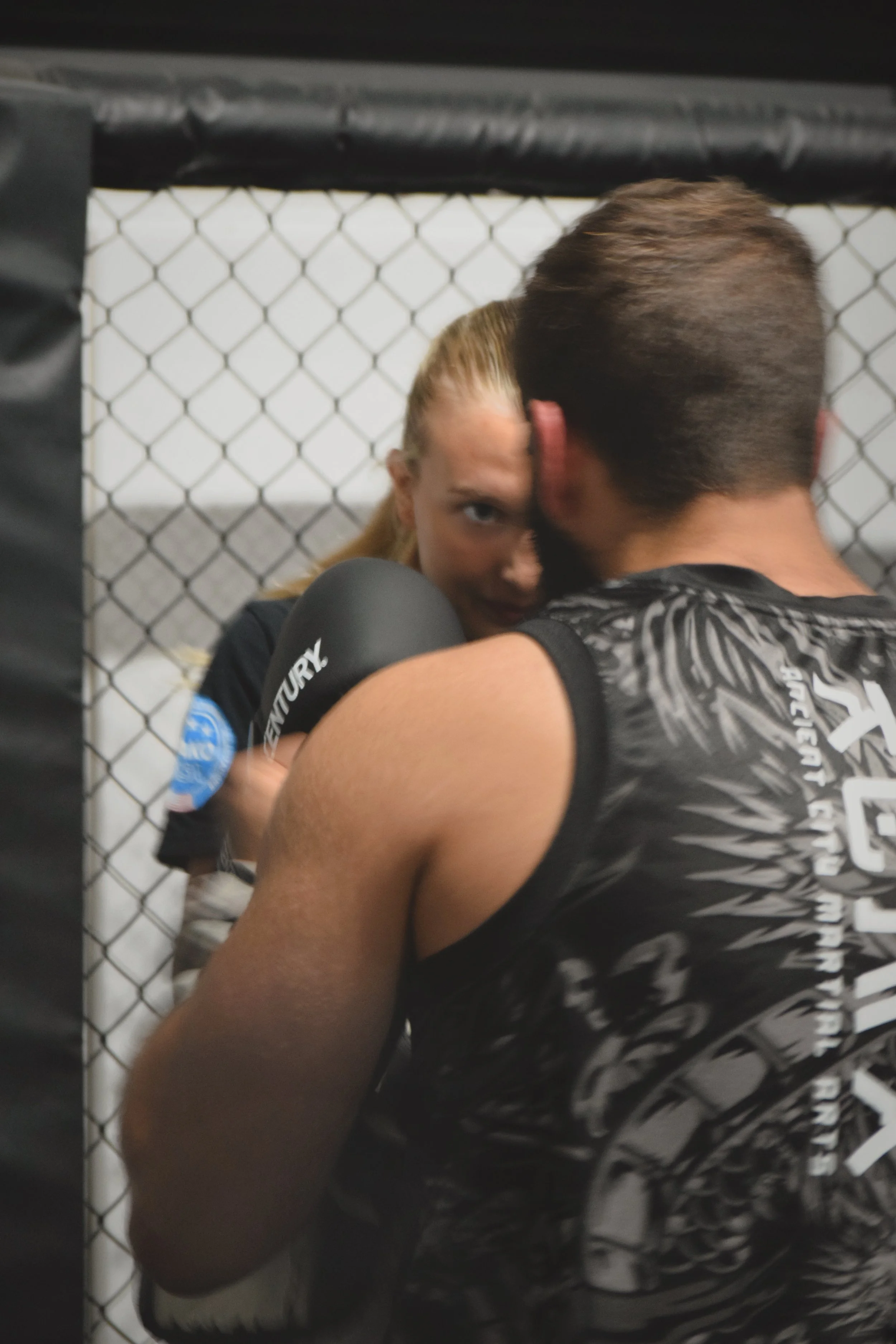
Parker Nassar
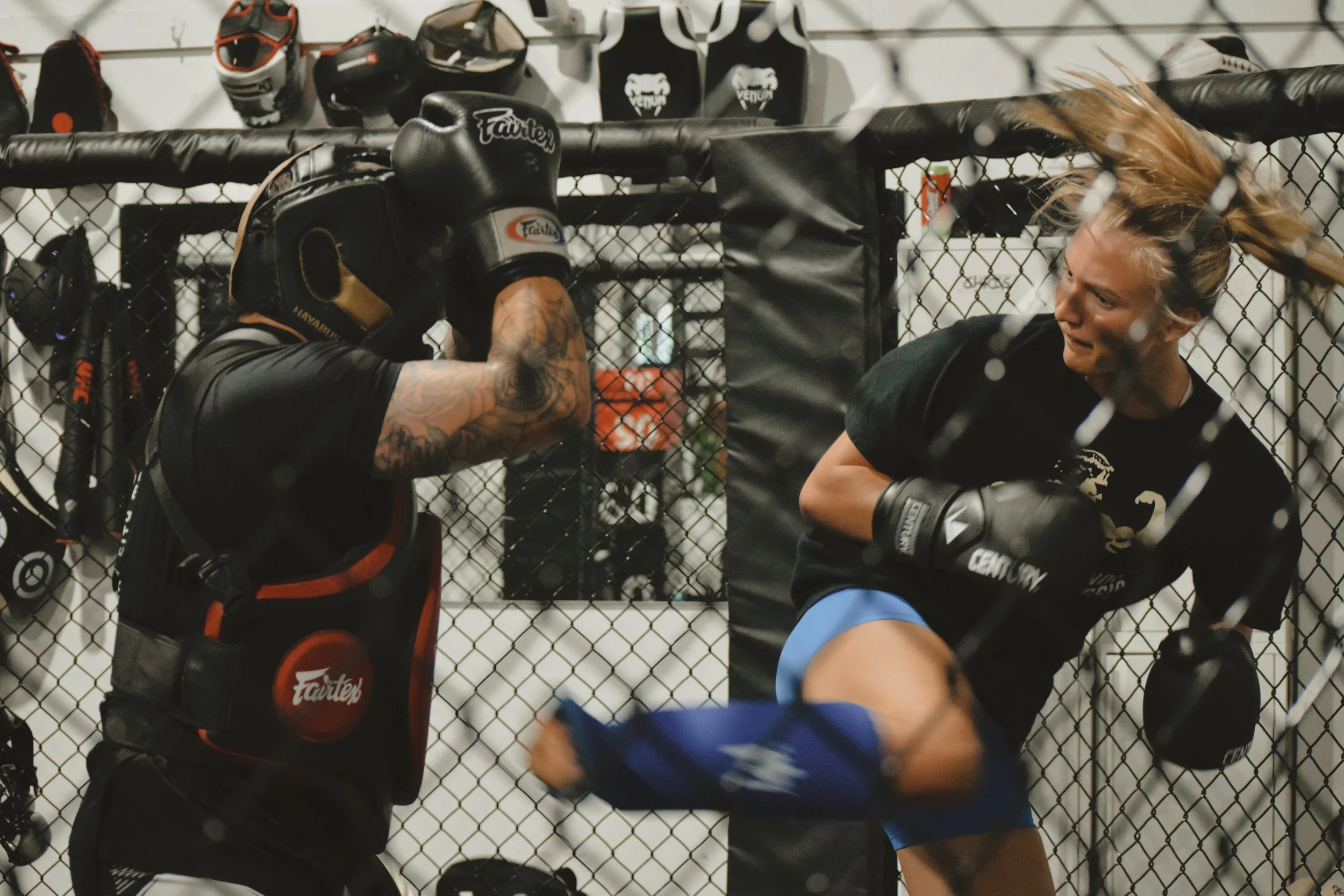
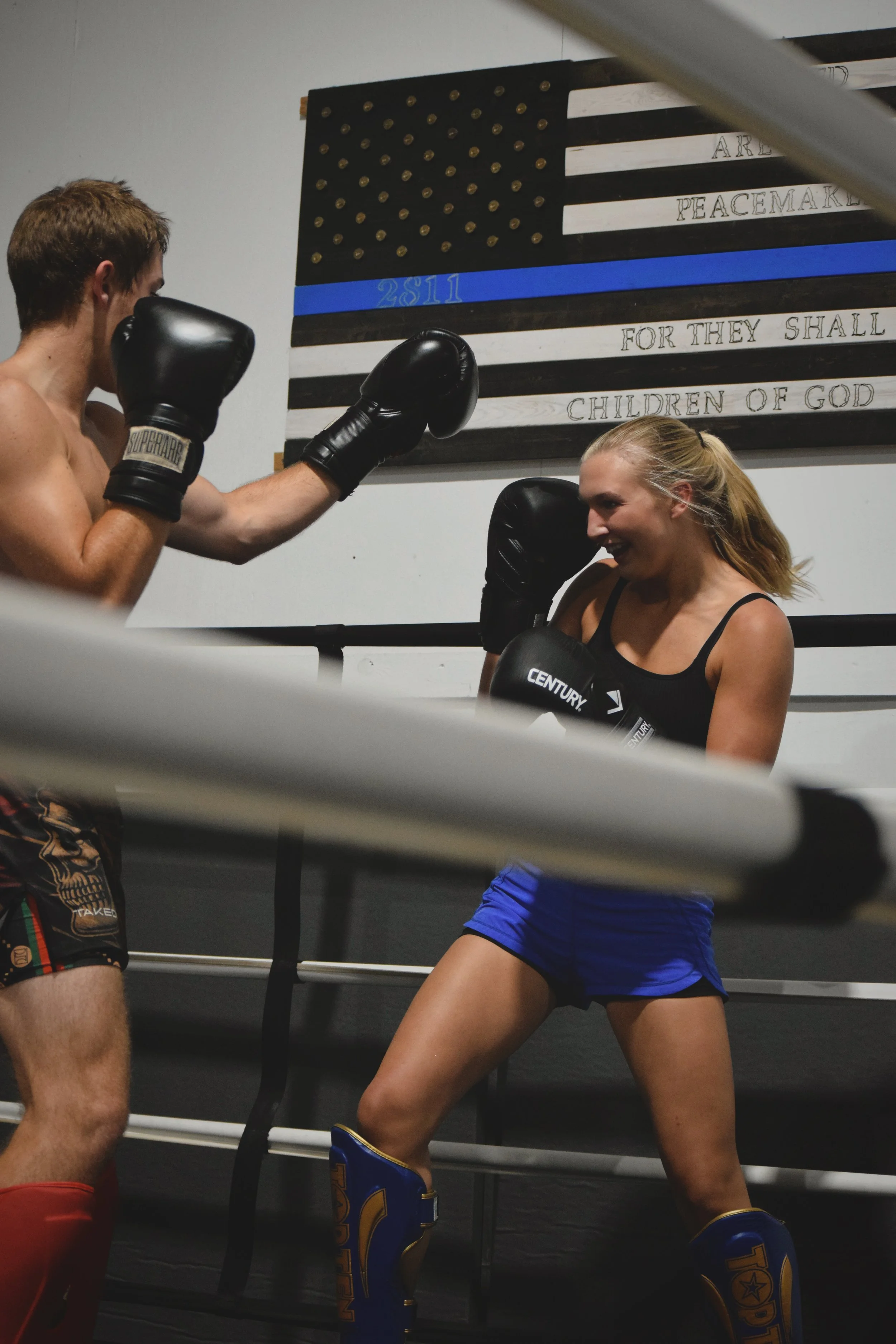
Eighteen-year-old Nassar is a kickboxing badass - so much so it’s difficult for the team to find a competitor willing to face her.
“I have a lot of fights on my record, so it's harder to find somebody who wants to fight me,” Nassar explains.
The recent graduate - a neuroscience major set to attend honors college in the Fall - has a fight coming up, scheduled for June 6th at Combat Night in Orlando.
Nassar has been training since she was 7, moving from taekwondo to kickboxing in recent years.
“It's just something I love to do,” she says. “It’s all on me. I get to do, you know, what I like to do. I don't have to rely on anybody else for it.”
“I also like to be able to just hit people, I guess,” she says, laughing. “I don't know. It's always been fun for me. I like to be in the ring. I like to do it myself.”