
Testing Fate
Testing Fate
Written & Photographed by Pavel Kuljuk
November 3, 2026
Journalist Pavel Kuljuk, who lives in Kramatorsk, shares with The Saint his experiences in the midst of war.
An unexpected financial windfall poses a mortal danger to me. Yet, I’ve decided to play - I don’t know how to lose. The more serious the challenge fate throws my way, the more forceful my response. That is how I have operated since childhood.
"We need to leave. There’s no time to ship the remaining packages. Our lives are more important than our belongings. We’ll rent a small truck or a van and head 50–60 miles away from Kramatorsk to a town that has a 'freight branch' of the postal service. We’ll find a place to stay there, somewhere we can live in exchange for covering the utility costs. From there, we’ll ship the rest of our things to the Transcarpathia region and keep earning an income while living in essentially rent-free housing," I told my wife.
"Are you sure it will be safe at that distance? Are you sure we’ll actually be able to find a place to stay for just the cost of utilities?" my wife asked.
"I think so," I replied. As it turned out, I was only partially right.
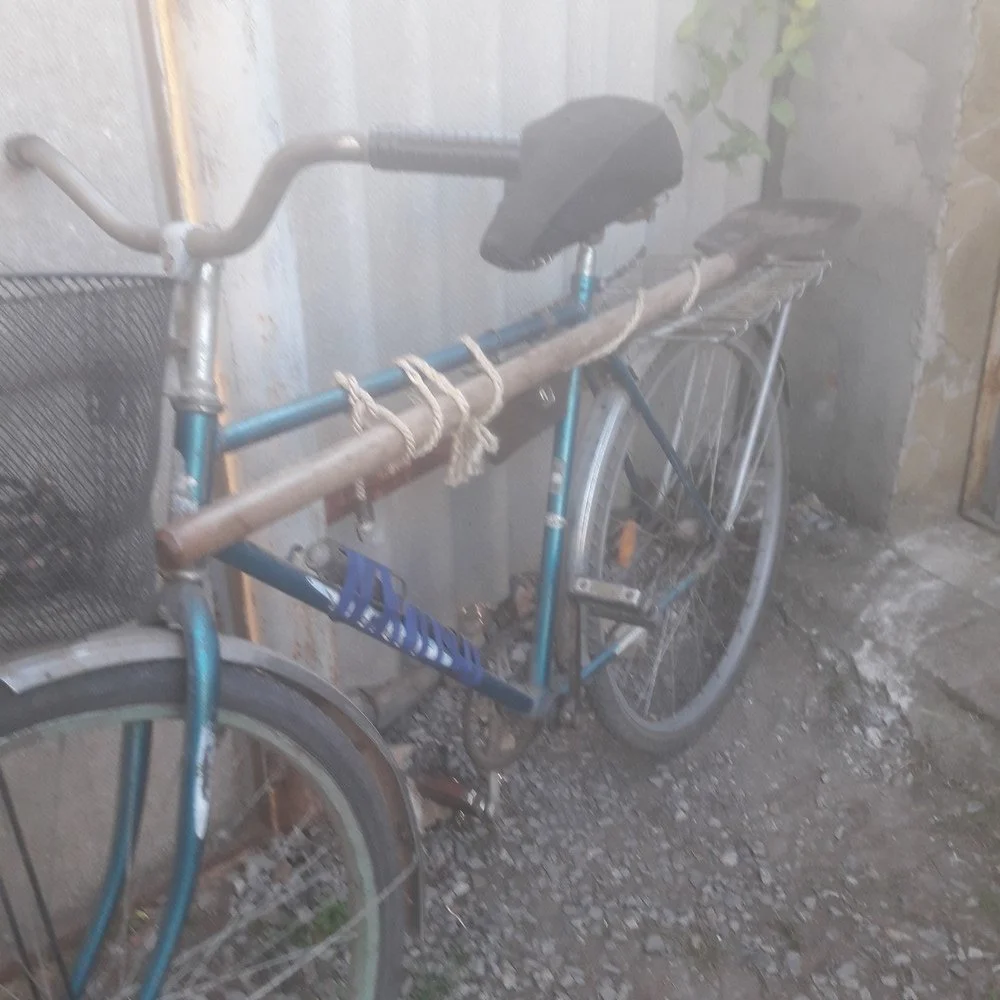
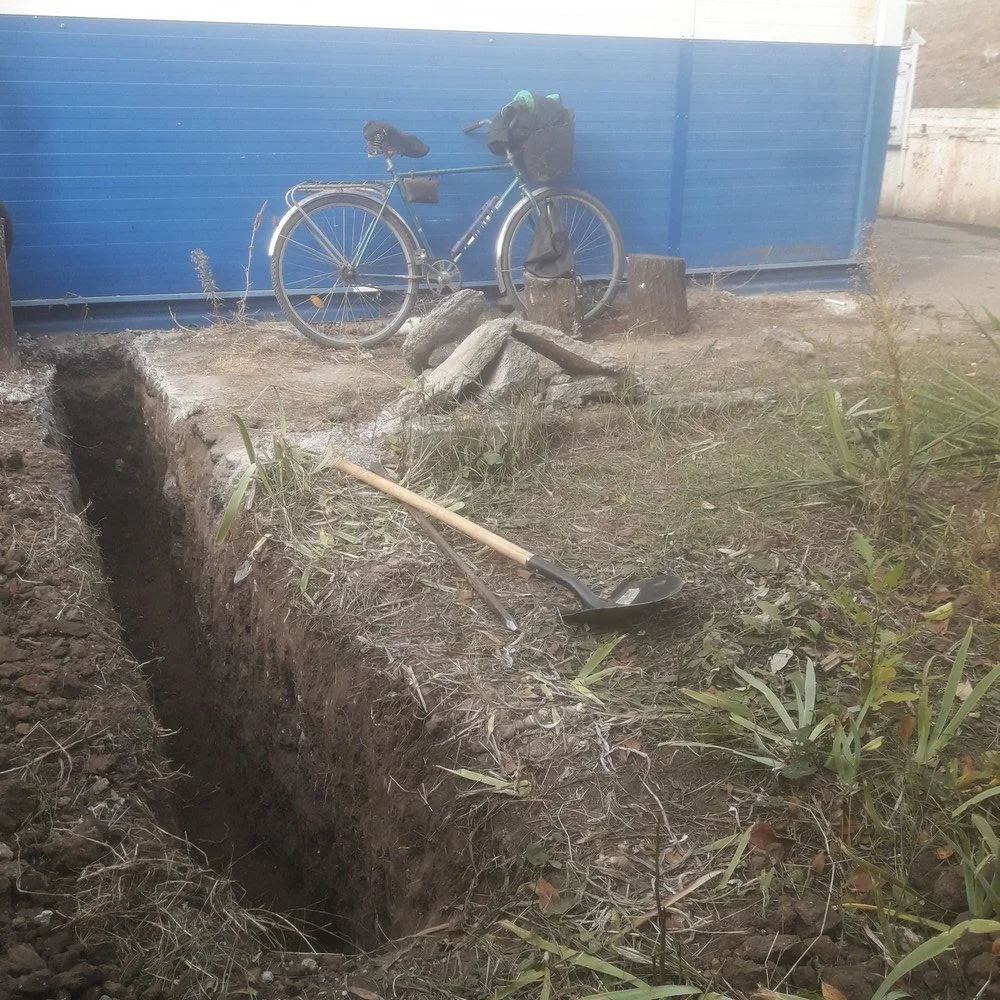
For my new job, I commute to work by bicycle. I use a crowbar and a shovel, breaking up asphalt and hard ground with these tools. Once, I even used a jackhammer.
The authorities have announced that, starting November 1, an extended curfew will be imposed in Kramatorsk. Under the new rules, civilians will only be permitted to move about the city between 11:00 a.m. and 4:00 p.m. That is a window of just five hours. The announcement of this extended curfew dealt an immediate, fatal blow to the city’s economy. Five hours is far too little time for any business to turn a profit.
Wholesale food warehouses have begun preparing to shut down. Prices in shops have skyrocketed - the cost of a box of tea doubled in a single day! Yet, despite the price hikes, goods have become scarce. Furthermore, the authorities have suspended all public transportation within Kramatorsk. Intercity buses will now depart from the outskirts of the city.
The shelling has become more frequent. Throughout the day, there is constant gunfire directed at Russian military drones. It is dangerous to be out in the courtyard; bullets fired into the sky fall back down to the ground and can be lethal.
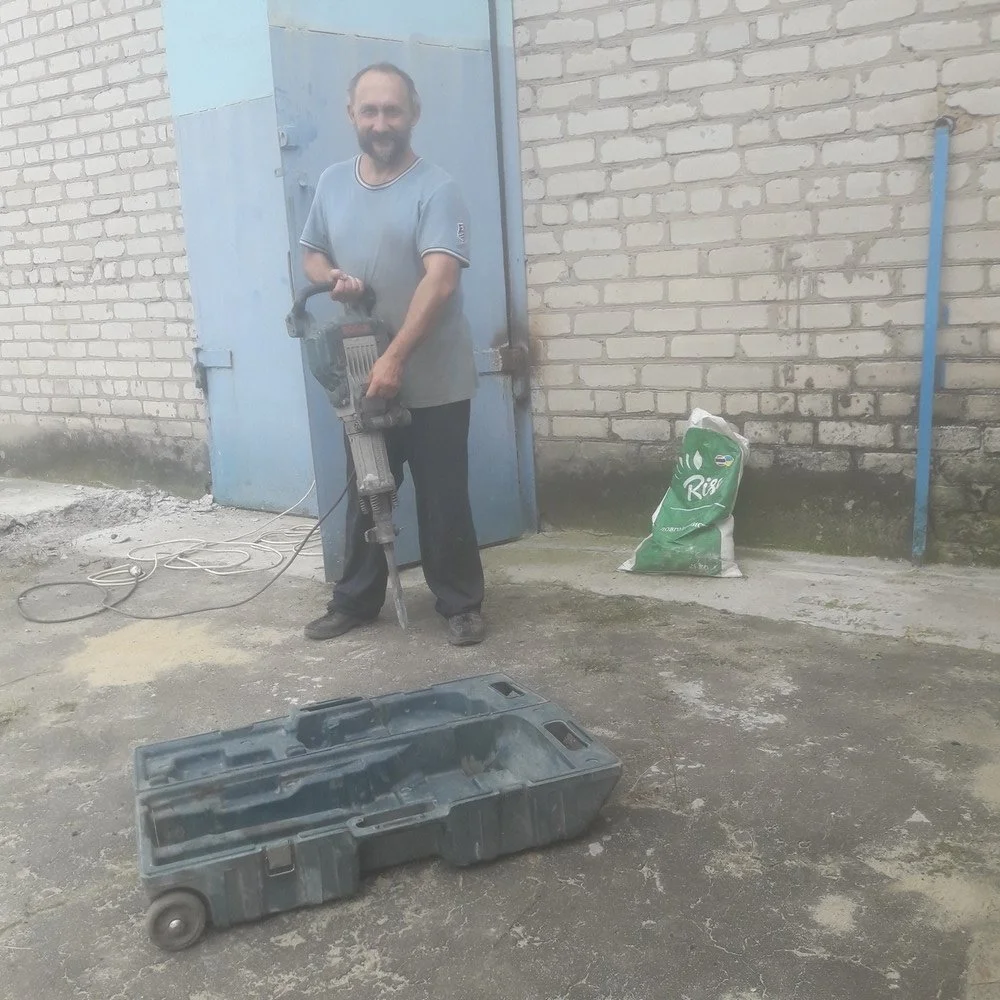
In this difficult situation, God helped me. For the first time since the spring, I managed to find an in-person job in Kramatorsk. I began working for a local company that provides water to the city's residents. The authorities decided to set up additional water wells for the public, and my job involves digging trenches and laying pipes and electrical cables for these wells. I usually work using just a crowbar and a shovel, but on one occasion, I was fortunate enough to use a massive jackhammer. Since my experience with tools is limited, this represented a step forward in my professional development.
My bosses - Anton, Mikhail and Yaroslav - are young guys who represent a new generation of Ukrainian business. They are the kind of leaders who don’t just manage; they also roll up their sleeves and work alongside the regular staff. That earns them a lot of respect. The labor shortage caused by the war has placed new demands on Ukrainian businesses, and these guys have successfully adapted to the new reality. I believe they would serve as powerful catalysts for growth in any American company. Leaders who truly understand the work their employees do are always highly valued.
"Would you like to immigrate to the U.S.?" I asked Mikhail.
"I mean after the war," I clarified.
"We’ll see once the war is over. It also depends on the outcome of the war," Mikhail answered.
He knows English and spoke with me a little - a pleasant surprise. But I was even more impressed by another one of my supervisors, Anton. On my first day of work, I didn’t receive my pay before leaving, so I headed home on my bicycle.Anton caught up with me in his car and handed me the money I had earned that day. It was the first time anyone had ever stopped me on the road just to give me money.
Looking at Anton, I thought the war had actually made people better. All the bad people had left Kramatorsk; only honest people remained in the city. After all, he could have chosen not to pay me and simply hired someone else, but he didn’t. In Ukraine, where the political leadership is mired in corruption, ordinary citizens remain honest. This means that our Ukrainian nation has a future.
A new job with pleasant people helps keep my spirits up. But everything else around us only makes life worse. I started looking for a place to live 50–60 miles away from Kramatorsk, thinking it would be safe there. I was wrong. Within a 60-mile radius behind the front lines near Kramatorsk, every village and road is within range of Russian drones. The Russian army is attempting to encircle Kramatorsk. Russian soldiers are flanking the city from both sides, and they have been successful in doing so.
On the bright side, thanks to the actions of the Russian army, housing in these areas has become free of charge. I managed to find a house at no cost on the border of the Donetsk and Kharkiv regions of Ukraine. It is located in the village of Novoznamenske, within the Oleksandrivka community. There is no long-term curfew there, but there is also no post office to send parcels and there are no shops. My plan to speed up the evacuation turned out to be a mistake.
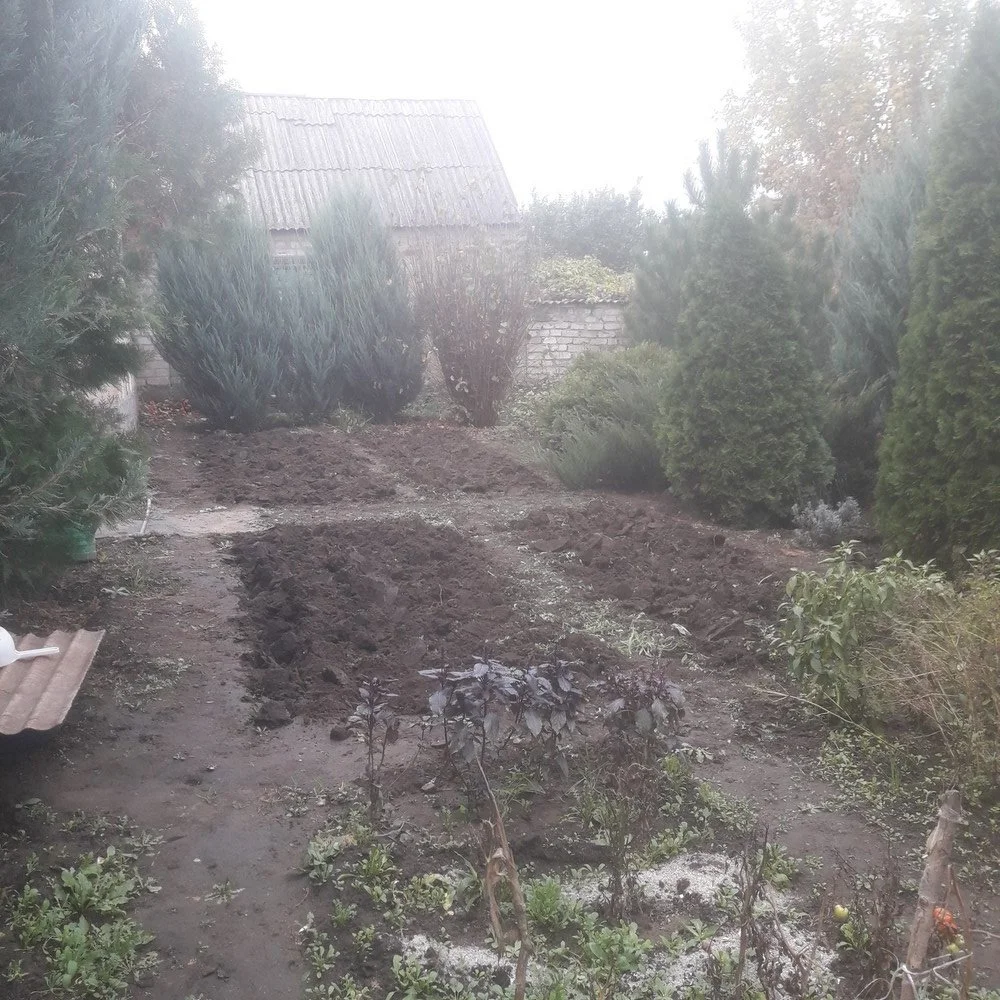
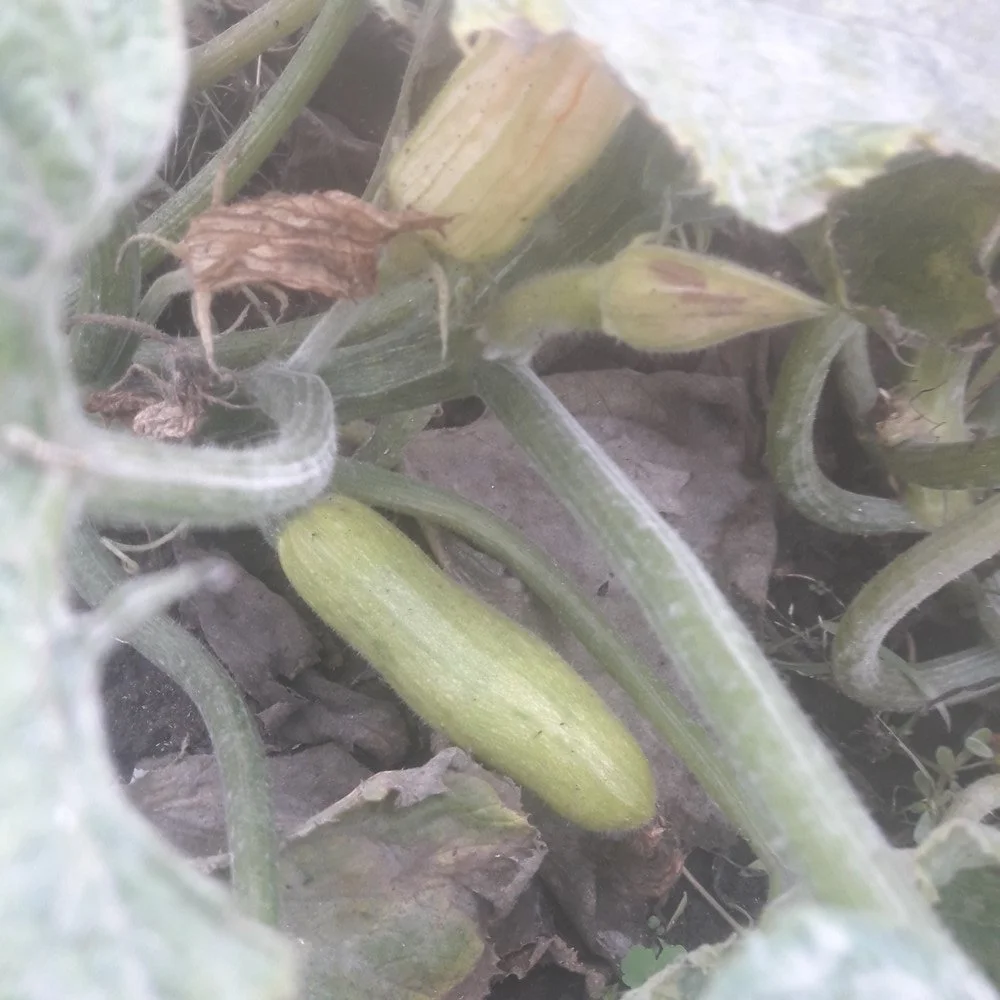
I dug over the vegetable garden on October 17th. It’s a kind of ritual - a way of saying goodbye to the garden before leaving.
Safe areas begin 80–100 miles from Kramatorsk. Full postal services are available there, but the cost of housing in those regions rises sharply - rent starts at $200 a month, which is the same as in the Transcarpathian region. Consequently, renting a place there makes no sense. I’ve found myself in a difficult situation.
The thing is, I don’t know how to lose. My whole life, I’ve conditioned myself to win and to strive for the best possible outcome. But this time, that drive to win could cost me my life. It would be more sensible to just leave my belongings behind and head straight for Transcarpathia. However, an unexpected increase in my income has given me hope that I might be able to take my larger items with me, too. I hadn’t even dreamed of that before. The most significant of these large items is a very big sewing machine, which is bolted to a specialized table. It’s impossible to ship this equipment via the regular postal service in Kramatorsk; it would need to be taken to a specific type of post office, a "freight branch,” that handles large items. But those branches are no longer operating in our city. My idea of finding such a branch near Kramatorsk, in an area where free housing might be available, turned out to be a mistake.
Now I need to find a solution to the problem. The easiest thing would be to just give up, leave my belongings behind and head to Transcarpathia. But for me, that "easy" option is actually the most difficult one. I’m going to try to find a well-paying job, one that would cover the rent for a second home in a safe area, specifically somewhere with operational postal branches that handle large shipments. This would allow me to send my bulkier items there and secure a second place to live at a cost comparable to what I’d pay in Transcarpathia. I have only two weeks to pull this off.