
Straddling the Gap:
Kramatorsk to Transcarpathia
Straddling the Gap:
Kramatorsk to Transcarpathia
Written & Photographed by Pavel Kuljuk
September 28, 2026
Journalist Pavel Kuljuk, who lives in Kramatorsk, shares with The Saint his experiences in the midst of war.
The desire to save our belongings compels us to stay on in Kramatorsk. It is not easy, though - after all, the people of Transcarpathia have proven to be incredibly hospitable, and part of our family is already living there.
"My sister Lyudmila called. She said she was coming on Saturday. But I told her…I’d come on Sunday instead because I need to send some packages," Svetlana said.
"Yes. You made the right decision. The post office is closed on Sundays. You'll be able to meet your sister then," I replied to my wife.
Friday, September 25th, felt like a cycling marathon. I made five trips to the nearest post office to ship packages. Each trip was about four miles long, and each package weighed around 40 pounds. In total, I cycled about 20 miles and hauled 200 pounds of cargo. That might not sound like much, but I also spent a lot of energy packing the boxes and waiting in line to drop them off. The whole process took about seven hours! Svetlana helps me prepare the packages at home. This has been going on for four days now, so the postal workers have come to recognize me.
"Maybe it would be better to hire a taxi and bring all the parcels at once," one of the mail carriers asked.
"No! I have so many packages that I’d need to hire a small truck. And that’s expensive. I need to save money. I’ve got a construction project going on in Transcarpathia," I replied.
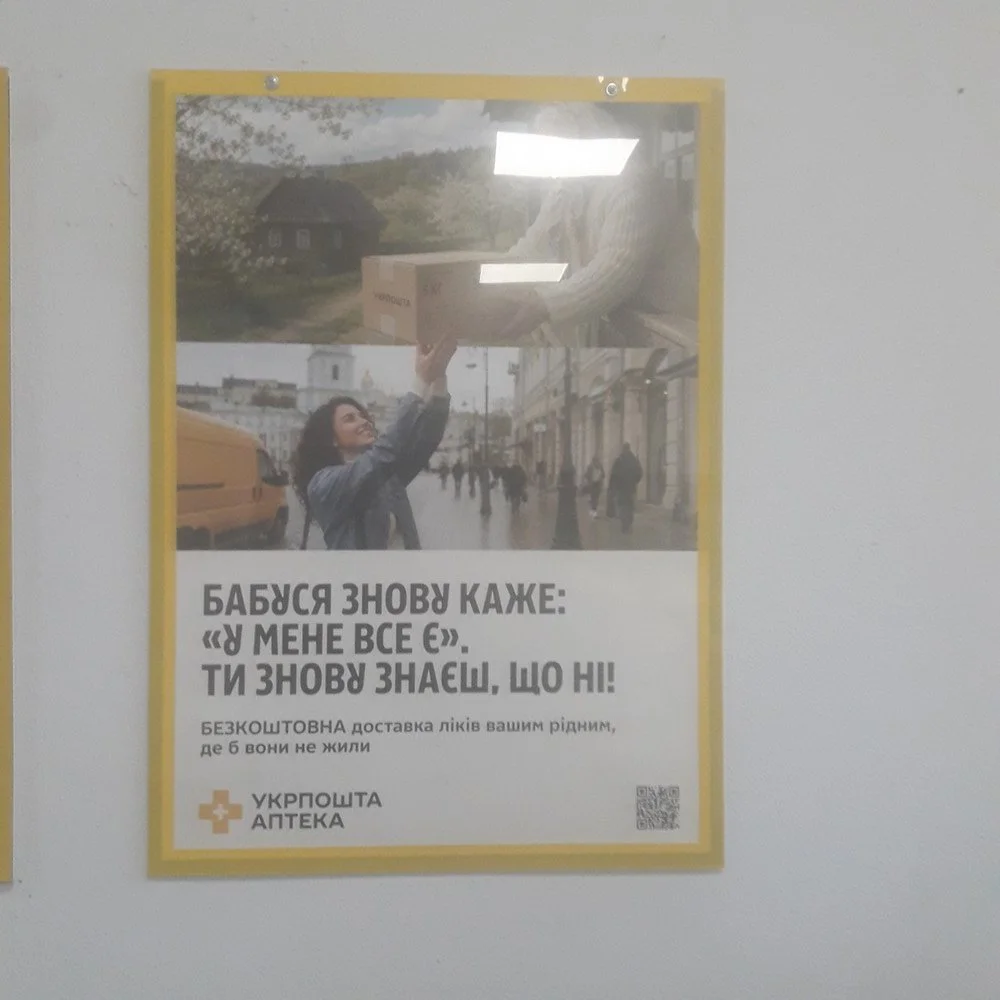
Ukrposhta branch No. 2 in Kramatorsk, Donetsk region. It has a pleasant atmosphere; many mail carriers and customers arrive by bicycle.
She understood me because a mail carrier's job in Ukraine is low-paying. Mail carriers very often earn only $200–250 a month. That is a shameful wage for a job that carries a risk of death. After all, the Russians are intent on destroying Ukrposhta vehicles and offices. I use Ukrposhta branch No. 2 in Kramatorsk. True professionals who love their work staff that branch. Despite frequent power outages, they remained calm and quickly processed all my parcels. However, I will need another 3 or 4 days to send off the remaining items. No one knows what might happen during that time.
But our optimism is bolstered by the fact that we’ve rented a house in Transcarpathia. I managed to secure a two-story cottage with a fireplace and a lovely bathroom. Svetlana’s parents have traveled to Transcarpathia and moved into the house. The locals gave them a very warm welcome; neighbors provide the retirees with vegetables and offer help through both advice and kind deeds. We were able to rent the house at an affordable price thanks to Vasilina Sharga, the real estate agent I told you about earlier. The place is located on the street right next to our plot of land. That’s great! Now we have a safe haven where we can go to escape dangerous Kramatorsk.
Our city is dying fast. There are many burnt-out vehicles along the road from my house to the post office. Russian drones are destroying vehicles day and night. All the major bridges, except for one, have already been damaged or destroyed. In our garden, fiber-optic cables now hang from the trees instead of cobwebs. These are thin cables that look like fishing line. Russian pilots use them to control their drones; as the drone flies, the cable unspools behind it. If you follow the cable, you can find the Russian pilot.
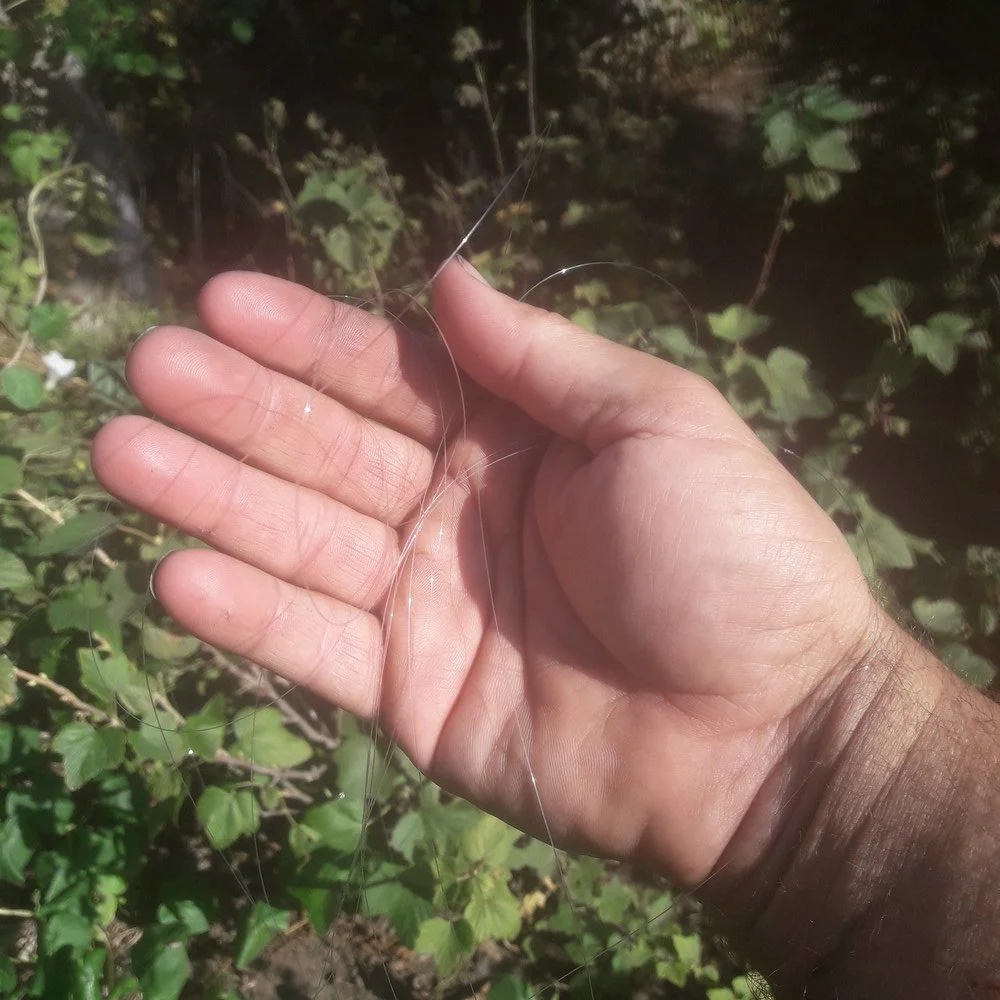
A fiber-optic cable from a Russian drone in our garden.
The saleswoman at the nearest shop said she would work for another two weeks and then evacuate. If that happens, only one salesperson will be left, working seven days a week. There is no telling how long that person can keep working without a break. The shop will likely close soon. There is hardly any electricity in our settlement of Ivanovka; we’ve had power for only 15 hours over the past nine days. We’ve been without water for two weeks now. I frequently see people loading their belongings onto trucks and leaving. Kramatorsk’s population is shrinking rapidly; there are already more soldiers in the city than civilians.
This really dampens my mood. The city has transformed from a wonderful place to live into a battlefield. It has become commonplace to step outside and see soldiers shooting down a drone or army armored vehicles rolling down the street.The asphalt is torn up by tank tracks. Almost all the gas stations have been destroyed. Every day, as I go about my business, I notice more ruined houses. It is deeply unsettling to see a home with blown-out windows and furniture or appliances jutting out from them. The owners might have survived, but now looters pick through the wreckage looking for anything of value. The police are rarely seen in the city. Walking around Kramatorsk has become unpleasant and dangerous.
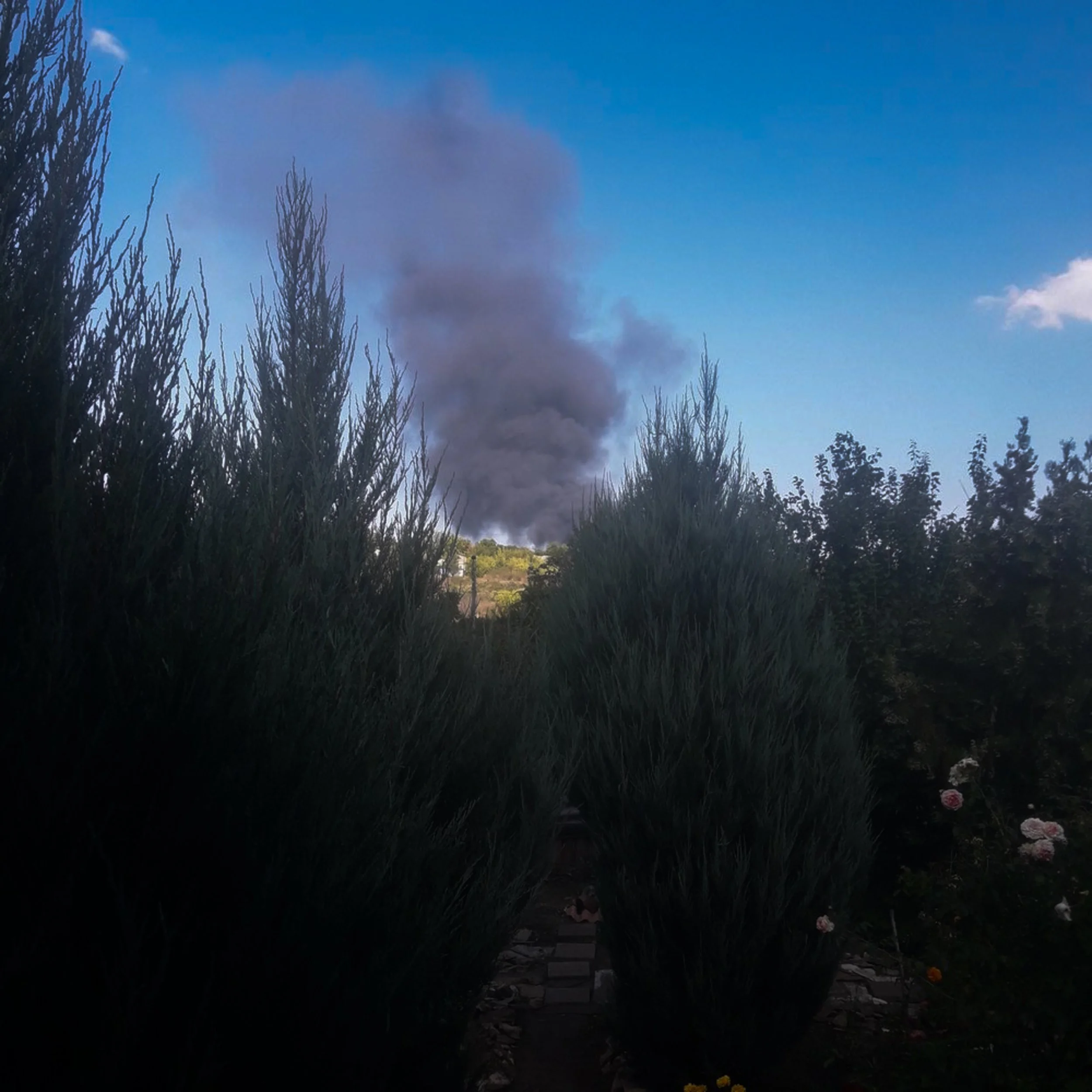
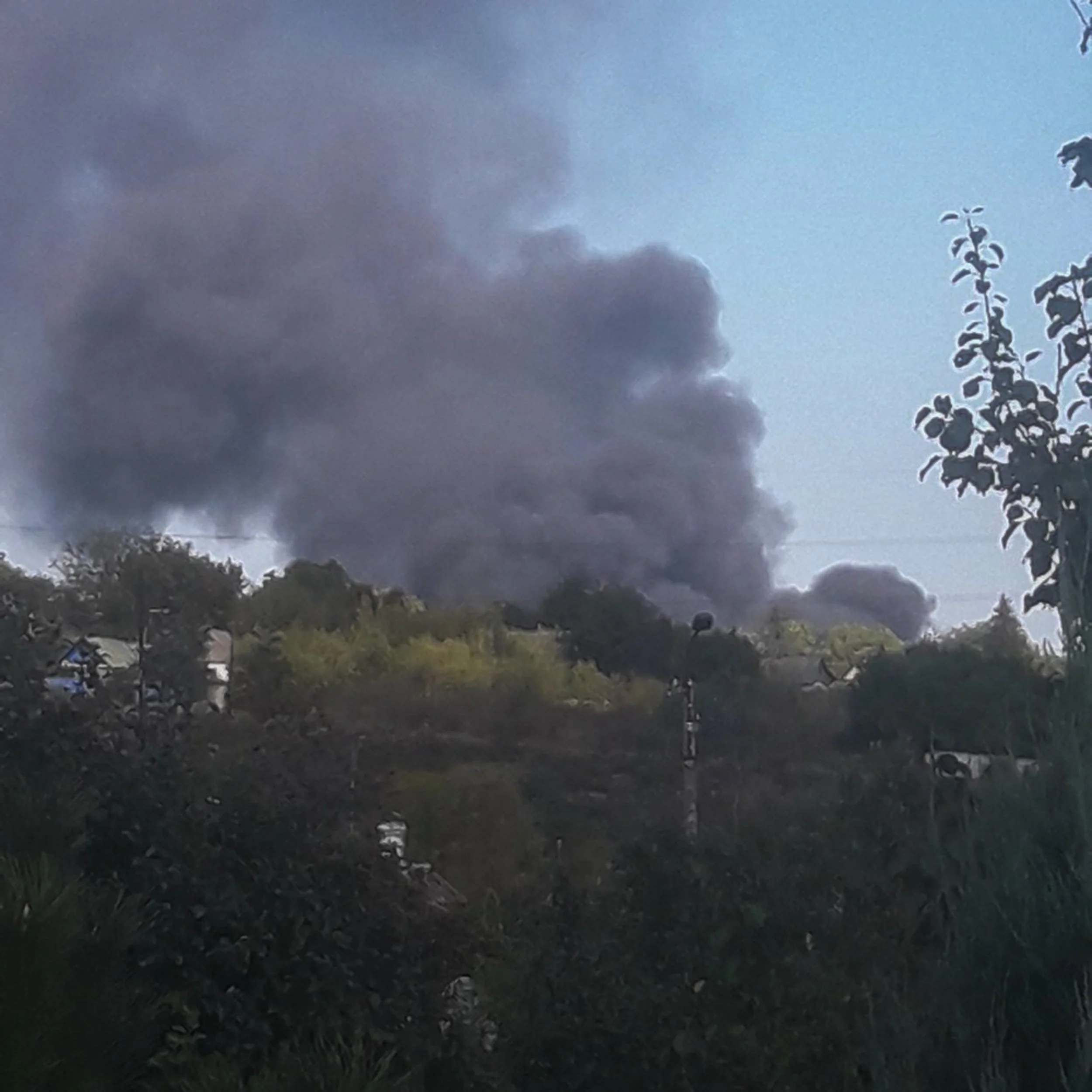
The Russian army has destroyed another building in Kramatorsk. The fire at the strike site is visible from our garden.
I continue to get around the city by bicycle, and we have already sold Svetlana’s car. It makes no economic sense to drive our own car to Transcarpathia. Covering a 1,000-mile route would require spending about $450 on fuel, which is nearly half the value of our 1991 model car. That is why we decided to sell it. We will leave Kramatorsk using public transport; it is cheaper and safer. A bus ticket to Transcarpathia costs $100, though it is possible to make the trip more cheaply by transferring. First, you can travel to the city of Dnipro - located about 150 miles from Kramatorsk - for $25. Then, in Dnipro, you can board a train and cover the rest of the journey to Transcarpathia for just $12! Train tickets in Ukraine are incredibly cheap. The Russians try to avoid destroying buses and trains, as doing so would trigger an international scandal.
As we wrap up our final preparations before leaving, I continue to encourage people I know to move to Transcarpathia. Many city residents don't know where to evacuate to, so they listen with interest to my personal experience of moving there. So far, I am pleased with how our story in Transcarpathia is unfolding. We are already practically there.